
Custom Ear Molds for Hearing Aids in Marietta and Cobb County, GA
American Family Hearing Aid Center makes custom ear molds in Marietta, GA from an impression of your own ear. A mold gives a behind-the-ear hearing aid a secure, comfortable seal, reduces whistling and helps stronger fittings perform. We also take impressions for earphone and in-ear monitor molds, while custom hearing protection covers plugs for noise, swimming and sleep. Book an impression.
What Is a Hearing Aid Ear Mold?
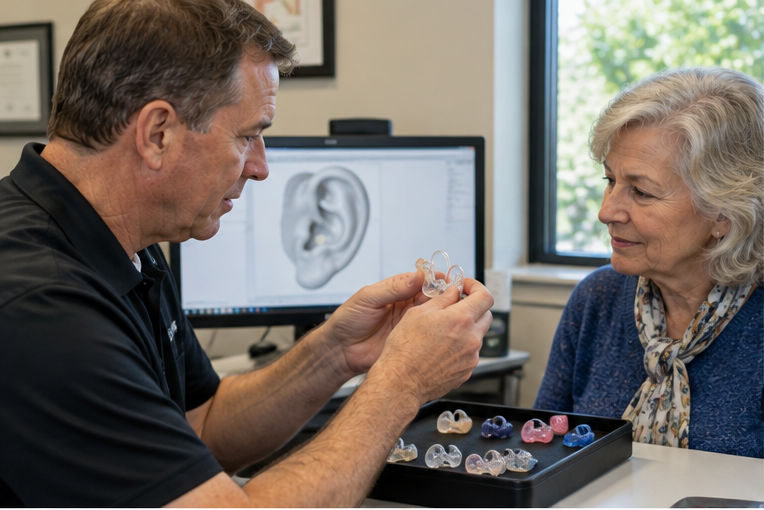
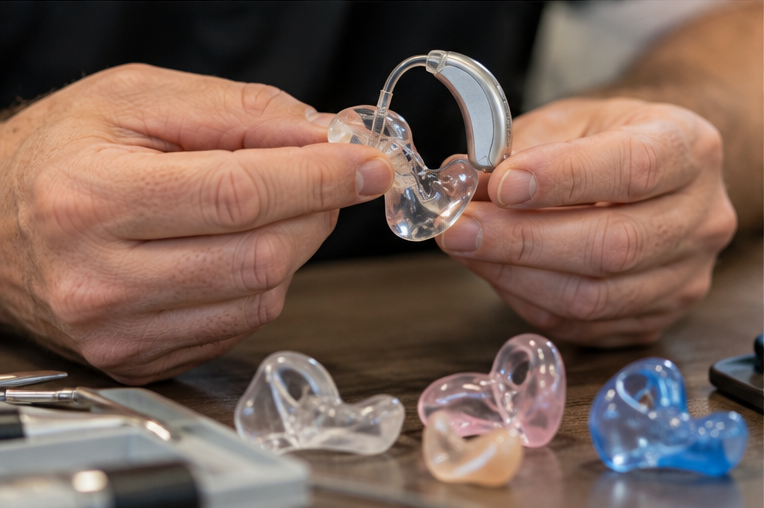
An ear mold is a custom piece shaped exactly like your ear canal and the bowl of your outer ear. On a behind-the-ear hearing aid, the mold holds the tubing in place and carries amplified sound into the canal. On some receiver-in-canal devices, a custom mold replaces the standard silicone tip to hold the speaker more securely.
Many people wear standard domes and never need a mold. Our guide to hearing aid domes explains when a dome works well. A mold becomes the better choice when the fit, the seal or the amount of power needed goes beyond what an off-the-shelf tip can provide.
Who Needs a Custom Ear Mold Instead of a Dome?
- Moderate to severe hearing loss: stronger amplification needs a tighter seal to avoid feedback.
- Persistent whistling: sound leaking around a dome can loop back into the microphone.
- Devices that slip or fall out: a mold anchors in the bowl of the ear and stays put.
- Unusual canal shapes: sharp bends or wide canals that standard domes cannot fit well.
- Active lifestyles: gardening, golf, exercise and yard work, where a dome can work loose.
Which Ear Mold Styles and Materials Are Available?
Molds come in several shapes, from a full shell that fills the bowl of the ear to slimmer half-shell, canal and skeleton styles that use less material and look more discreet. Receiver-in-canal wearers can have a custom mold built around the speaker for a firmer hold.
The material matters as much as the shape. Hard acrylic is durable, easy to clean and simple to adjust. Soft silicone is more comfortable for sensitive ears and seals better for strong fittings. Small vents can be added to let air in and reduce the plugged feeling, balanced against the power your hearing loss needs.

How Is an Ear Impression Taken?
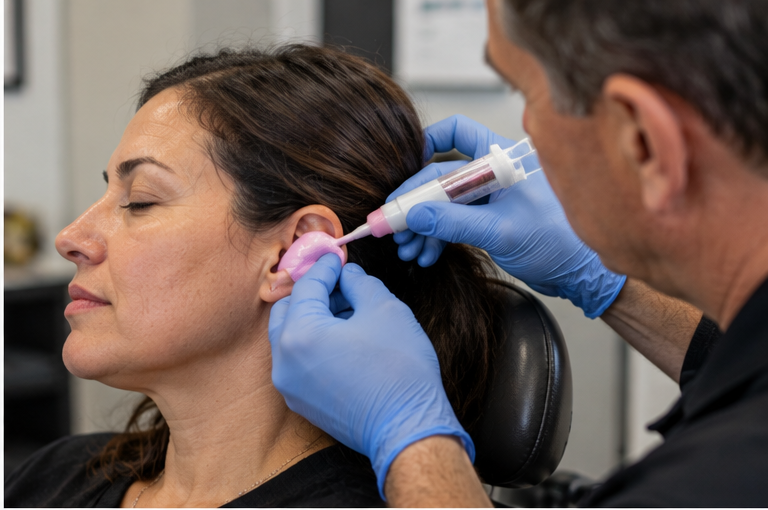
The appointment is quick and uses no needles or tools inside the ear beyond a soft protective dam.
- Mark checks each canal with a video otoscope, since an impression cannot be taken past wax or irritation.
- A small foam dam is placed in the canal to protect the eardrum.
- Soft impression material is gently filled into the canal and outer ear, then sets in a few minutes.
- The impression comes out in one piece and is sent to the laboratory.
- Your finished molds are ready in about one to two weeks, and the fit is checked before you leave.
If wax is in the way, we can remove it first. See our ear cleaning and earwax removal service for details.
When Should an Ear Mold Be Remade or Retubed?
Ears change shape slowly with age and weight changes, and molds wear over time. Signs it is time for attention include:
- New whistling that was not there before
- A mold that feels loose or slips out when you chew or talk
- Sore spots, redness or itching where the mold sits
- Cracks, rough edges or a yellowed, hardened appearance
- Tubing that has stiffened, discolored or collected moisture
Tubing on behind-the-ear molds generally needs replacing every three to six months, and many molds are remade every few years. Tubing changes and fit checks are part of a clean and check, and a device that still sounds weak can be assessed for repair.
Can Ear Molds Be Made for Earphones and In-Ear Monitors?
Yes. Custom molds for earphones and in-ear monitors seal out background noise, so you can listen at a lower, safer volume, and they stay comfortable for hours. Musicians who also need protection on stage can read about musician’s earplugs.
How Do You Care for Ear Molds at Home?
- Wipe the mold with a dry cloth every day and clear the sound opening with your cleaning tool.
- For behind-the-ear molds, detach the mold from the hearing aid before washing it in mild soapy water.
- Never put the hearing aid itself in water.
- Dry the mold and tubing completely before reattaching, and store everything in a dry case overnight.
Our article on keeping hearing aids working through a Georgia summer covers moisture, the most common enemy of molds and tubing.
Where Can You Get Custom Ear Molds in Cobb County?
American Family Hearing Aid Center is at 145 N Marietta Pkwy NE, Suite E, Marietta, GA 30060, open Monday to Thursday, 9:00 a.m. to 4:00 p.m., and Friday, 9:00 a.m. to 1:00 p.m. We take ear impressions for patients across Marietta, East Cobb, West Cobb, Kennesaw, Smyrna, Roswell and Acworth.
Call 770-590-8662 or book an ear impression. Our earlier guide on what custom ear molds are covers every type of mold we make.
Custom Ear Molds FAQs in Marietta, GA
How long does it take to get custom ear molds?
The impression takes a few minutes, and finished molds usually come back from the laboratory in about one to two weeks. We check the fit and seal at a short pickup visit.
Does taking an ear impression hurt?
No. It feels cool and a little full while the material sets, but it is not painful. A protective dam keeps the material away from the eardrum, and the whole process takes a few minutes per ear.
How long do hearing aid ear molds last?
Many molds last several years, though tubing on behind-the-ear molds usually needs replacing every three to six months. A remake is due when the mold loosens, cracks or starts causing whistling or sore spots.
Can I wash my ear mold?
Yes, if it detaches from the hearing aid. Separate a behind-the-ear mold from the device, wash it in mild soapy water, then dry it and the tubing completely. Never put the hearing aid itself in water.
Why does my ear mold whistle?
Whistling usually means sound is leaking around the mold. Common causes are wax in the canal, a mold that has loosened as the ear changed shape, or cracked tubing. A quick fit check shows which one it is.
Can you make molds for hearing aids bought elsewhere?
In most cases, yes. We take impressions and order molds for many makes and models. Bring your hearing aids to the appointment so the mold is matched to your device.
Are hard or soft ear molds better?
Neither is better for everyone. Hard acrylic lasts longer and is easy to clean, while soft silicone is more comfortable for sensitive ears and seals better for strong fittings. Mark recommends a material based on your hearing loss and ear shape.
Do I need a hearing test before getting a new ear mold?
Not always. If your hearing may have changed since your last fitting, a hearing test first makes sure the new mold and your device settings match your current hearing.
Call 770-590-8662 or book an ear impression.