
Home › Hearing Loss › Tinnitus
Understanding Tinnitus
Have you heard a ringing, buzzing or hissing that nobody else can hear? That is tinnitus, and you are in very large company. It affects roughly one in ten American adults, and it is the most common service-connected disability among US veterans.
IN SHORT
Tinnitus is the perception of sound when no external sound is present. It is usually described as ringing, but buzzing, hissing, roaring and clicking are all common. It is a symptom rather than a disease, and the most frequent underlying finding is hearing loss at the same frequencies. It affects around 10% of US adults, it has no cure, and it can usually be made substantially less intrusive.
What is tinnitus?
Tinnitus is the medical term for perceiving sound that has no external source. Most people call it ringing in the ears, but it takes many forms: buzzing, hissing, whooshing, roaring, chirping, humming or clicking. Some people hear one steady tone, others a mixture. It can be in one ear, both ears, or seem to come from inside the head.
It can be constant or come and go. For some people it is a mild curiosity noticed only in a quiet room. For others it is genuinely debilitating and dominates their attention, disrupts sleep and affects mood. Two people can have tinnitus of identical measured loudness and be affected completely differently, which is one of the most important things to understand about it.
Tinnitus is a symptom, not a disease. That distinction matters, because it means the useful question is not how to silence it but what is producing it and what can be done about that.
Subjective and objective tinnitus
The great majority of tinnitus is subjective, meaning only you can hear it. A small minority is objective, meaning it is produced by something in the body such as blood flow or muscle activity, and a clinician can sometimes hear it too. Objective tinnitus always needs medical investigation, because there is a physical source to find.
What causes tinnitus?
The precise mechanism is still not fully understood. The leading explanation is that when the ear stops sending signal at certain frequencies, the brain increases its own gain to compensate, and that internally generated activity is what you hear. This is why tinnitus and hearing loss so often arrive together.
The common contributors:
- Aging. The hair cells of the inner ear wear out over decades, the same process behind age-related hearing loss
- Noise exposure. A working life around machinery, or a single gunshot or concert. Cumulative and permanent
- Obstruction. Impacted earwax, congestion or middle ear fluid changing how the eardrum behaves. Often reversible
- Head, neck and jaw injury. Trauma affecting nerve pathways, blood flow or the jaw joint
- Barotrauma. Rapid pressure change from flying, diving or a blast
- Medication. Some antibiotics, platinum chemotherapy agents and high-dose anti-inflammatories are known to affect the inner ear
- Other conditions. Otosclerosis, Meniere's disease, thyroid disorders, anemia and cardiovascular conditions including high blood pressure
One correction worth making: stress and poor sleep are very often blamed for causing tinnitus. They do not cause it. What they do is make existing tinnitus far more intrusive, which feels identical from the inside and is why so many people first notice it during a difficult period.
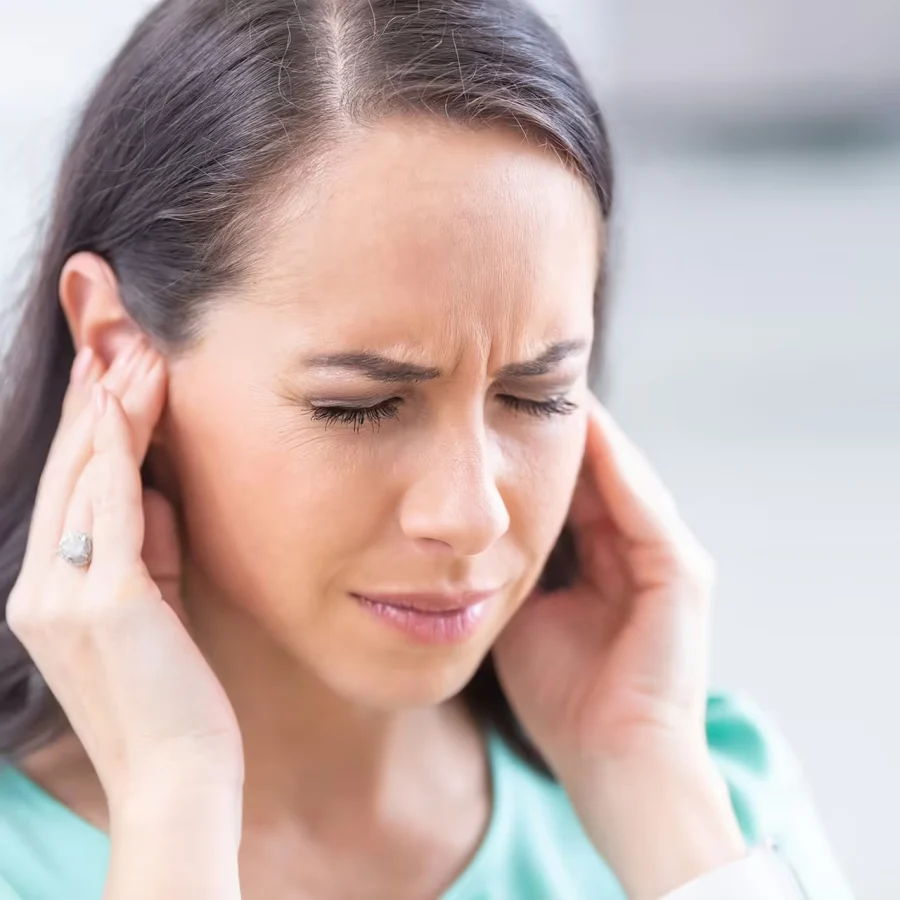
Pulsatile tinnitus is a different thing
If your tinnitus pulses in time with your heartbeat, it belongs in a separate category. Most lists of tinnitus causes bundle it in with the rest, and that is unhelpful, because the causes are usually vascular rather than cochlear and some of them need treatment.
Pulsatile tinnitus warrants medical evaluation, often including imaging, and it is not something a hearing aid appointment addresses. The same applies to tinnitus that arrived suddenly, is in one ear only, or comes with vertigo, ear pain, drainage or facial weakness.
Contact your physician rather than waiting for a hearing appointment. We will happily look at the hearing side once you have been seen.
Tinnitus and hearing loss travel together
Most people with bothersome tinnitus also have hearing loss, and usually at the same frequencies where the tinnitus sits. That is not a coincidence. The prevailing explanation is that when the cochlea stops delivering input at particular pitches, the brain turns up its own internal gain to compensate, and the tinnitus is that compensation being heard.
It follows directly that restoring the missing input is the most effective single step for most people. Give the brain real sound at those frequencies again and it has less reason to generate its own. This is why treating the hearing loss so often reduces the tinnitus, and why a hearing test is the sensible first move even if hearing is not what brought you in.
One clarification worth making: sensorineural hearing loss is permanent, but it is not always progressive. Age-related loss does tend to increase slowly over years, while noise damage from a specific event may remain stable. Being told your hearing will inevitably get worse is not accurate, and it is worth having your own numbers rather than an assumption.
Can tinnitus be cured?
No. There is no cure and no medication approved to eliminate it, and any product claiming otherwise is misrepresenting itself in its first sentence.
That is not the same as being told to live with it. There is a real difference between tinnitus you cannot cure and tinnitus you barely notice, and moving from the first to the second is achievable for most people. Broadly the routes are treating any underlying hearing loss, sound therapy tuned to your tinnitus, structured habituation approaches including cognitive behavioral therapy, and resolving any reversible cause such as wax or middle ear fluid.
Each of those is set out properly on our treatment page, along with an honest account of what does not work.
Things that help while you wait for an appointment
None of these cost anything, and all of them help a reasonable number of people.
- Do not chase silence. A quiet room makes tinnitus more prominent, not less. Add low-level sound at night: a fan, an air purifier, rain on a speaker.
- Protect your ears from further noise. A single loud exposure can worsen tinnitus for days, and repeated exposure does so permanently.
- Try two weeks without caffeine or alcohol and judge for yourself. It makes a difference for some people and none for others.
- Note when it is worst. Patterns are genuinely useful information at an appointment.
- Tell somebody. Tinnitus is isolating precisely because it is inaudible to everyone else, and saying it out loud helps more than it should.
Common questions
What is tinnitus?
Tinnitus is the perception of sound with no external source, most often described as ringing but also heard as buzzing, hissing, roaring or clicking. It is a symptom rather than a disease, and the most common underlying finding is hearing loss at the same frequencies.
How common is tinnitus?
It affects roughly one in ten American adults, and it is the most prevalent service-connected disability among US veterans, largely because of noise exposure during service.
What does tinnitus sound like?
Different things to different people. Ringing is most commonly reported, followed by buzzing, hissing, whooshing, roaring, humming and clicking. It may be one steady tone or several, in one ear, both, or seemingly inside the head.
Is tinnitus a sign of something serious?
Usually not. Most tinnitus accompanies hearing loss and is not dangerous. The exceptions matter though: tinnitus that pulses with your heartbeat, is only in one ear, arrived suddenly, or comes with vertigo or ear pain all need medical evaluation.
Does stress cause tinnitus?
No, but it makes existing tinnitus considerably more intrusive, which feels much the same from the inside. That is why many people first notice tinnitus during a difficult period.
Will my tinnitus get worse?
Not necessarily. For many people it remains stable and becomes less noticeable over time as they habituate. Protecting your hearing from further noise damage is the most useful thing within your control.
Can tinnitus be cured?
No. There is no cure and no approved medication to eliminate it. It can usually be made far less intrusive, which for most people is the outcome that actually matters.
Why is tinnitus worse at night?
Because the room is quiet. The tinnitus has not become louder, the background it competes with has become softer. Low-level sound in the bedroom is the single most effective step most people can take.
Get it measured rather than guessed at
A consultation takes about an hour. You leave knowing your audiogram, the pitch and loudness of your tinnitus, and which options are worth your time.