
Home › Hearing Aids › Styles and Types

Hearing Aid Styles and Types
Six main styles, from invisible in the canal to behind the ear. Which one suits you depends on your hearing loss, your hands and your eyes, and where you most need to hear, not on which looks smallest.
IN SHORT
Hearing aids come in six main styles. Invisible-in-canal and completely-in-canal sit deepest in the ear and are the most discreet, suiting mild to moderate loss. In-the-canal and in-the-ear are custom molded and easier to handle. Receiver-in-canal is the most commonly fitted style today. Behind-the-ear delivers the most power and the longest battery life.
The six hearing aid styles
Every style below is one we fit here in Marietta. The differences that matter are power, handling and how much of the ear they fill.

IIC
Invisible-in-Canal
Sits deepest in the ear canal and is custom molded from an impression, so almost nobody will see it. Best for mild to moderate loss. The smallest controls and the shortest battery life of any style.
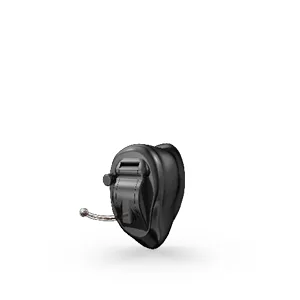
CIC
Completely-In-Canal
Fills the canal with only a small removal handle showing. Discreet and custom made, with a little more battery than an IIC. Suits mild to moderate loss.
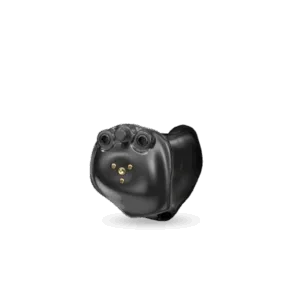
ITC
In-The-Canal
Partially visible in the outer ear, with room for a slightly larger battery and a volume control you can actually feel. Mild to moderately severe loss.
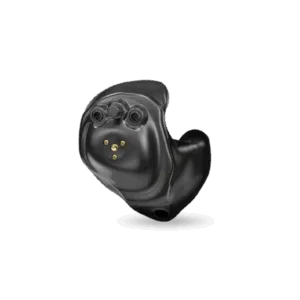
ITE
In-The-Ear
Custom made to fill the outer ear bowl. The easiest of the custom styles to insert and remove, which matters more than most people expect. Mild to severe loss.
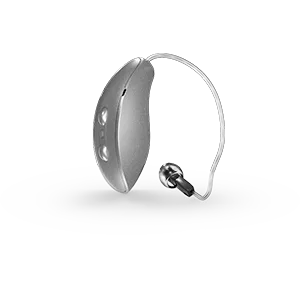
RIC
Receiver-in-Canal
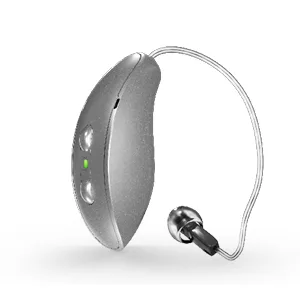
The most commonly fitted style today. A small case behind the ear with a thin wire to a receiver in the canal. Discreet, comfortable, and available rechargeable with Bluetooth. Mild to severe loss.
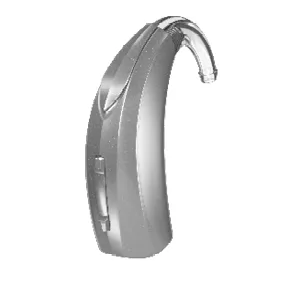
BTE
Behind-The-Ear
The most power and the longest battery life, with the largest controls. The right answer if arthritis, tremor or low vision makes tiny devices impractical. Mild to profound loss.
Hearing aid styles compared
The same six styles side by side. On a phone, swipe the table sideways to see every column.
| Style | How visible | Hearing loss it suits | Main trade-off |
|---|---|---|---|
| Invisible-in-CanalIIC | Effectively invisible | Mild to moderate | Tiny controls, shortest battery life, more wax exposure |
| Completely-In-CanalCIC | Only a small handle shows | Mild to moderate | Small controls, rechargeable rarely available |
| In-The-CanalITC | Partly visible in the outer ear | Mild to moderately severe | Can feel occluded without a good vent |
| In-The-EarITE | Fills the ear bowl | Mild to severe | More visible, but far easier to handle |
| Receiver-in-CanalRIC | Discreet, a thin wire over the ear | Mild to severe | Wire and dome need routine replacing |
| Behind-The-EarBTE | Most visible | Mild to profound | Largest of the styles, and the most robust |
Features and options across the styles
Style is only half the decision. These are the features and specialist options we fit, most of them available across several of the styles above.
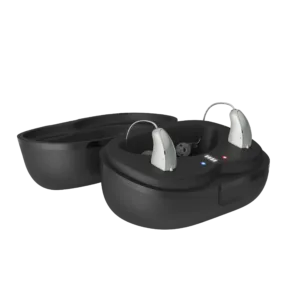
Feature
Rechargeable Hearing Aids
A sealed cell instead of size-10 batteries, giving a full day and more from an overnight charge. The single biggest quality-of-life change for anyone with arthritis or low vision.
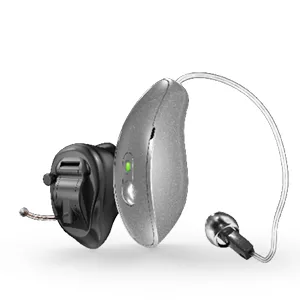
Feature
Hearing and Activity Tracking
Devices that log wear time, steps and activity in a phone app, and can detect a fall and alert a contact you choose.
Condition
Tinnitus Relief
Built-in sound therapy tuned to your tinnitus, alongside amplification. Most people with bothersome tinnitus also have hearing loss at the same frequencies.
Condition
Single-sided Hearing Loss
Solutions for hearing loss in mainly one ear, including routing sound from the poorer side across to the better one.
Service
Custom Hearing Protection
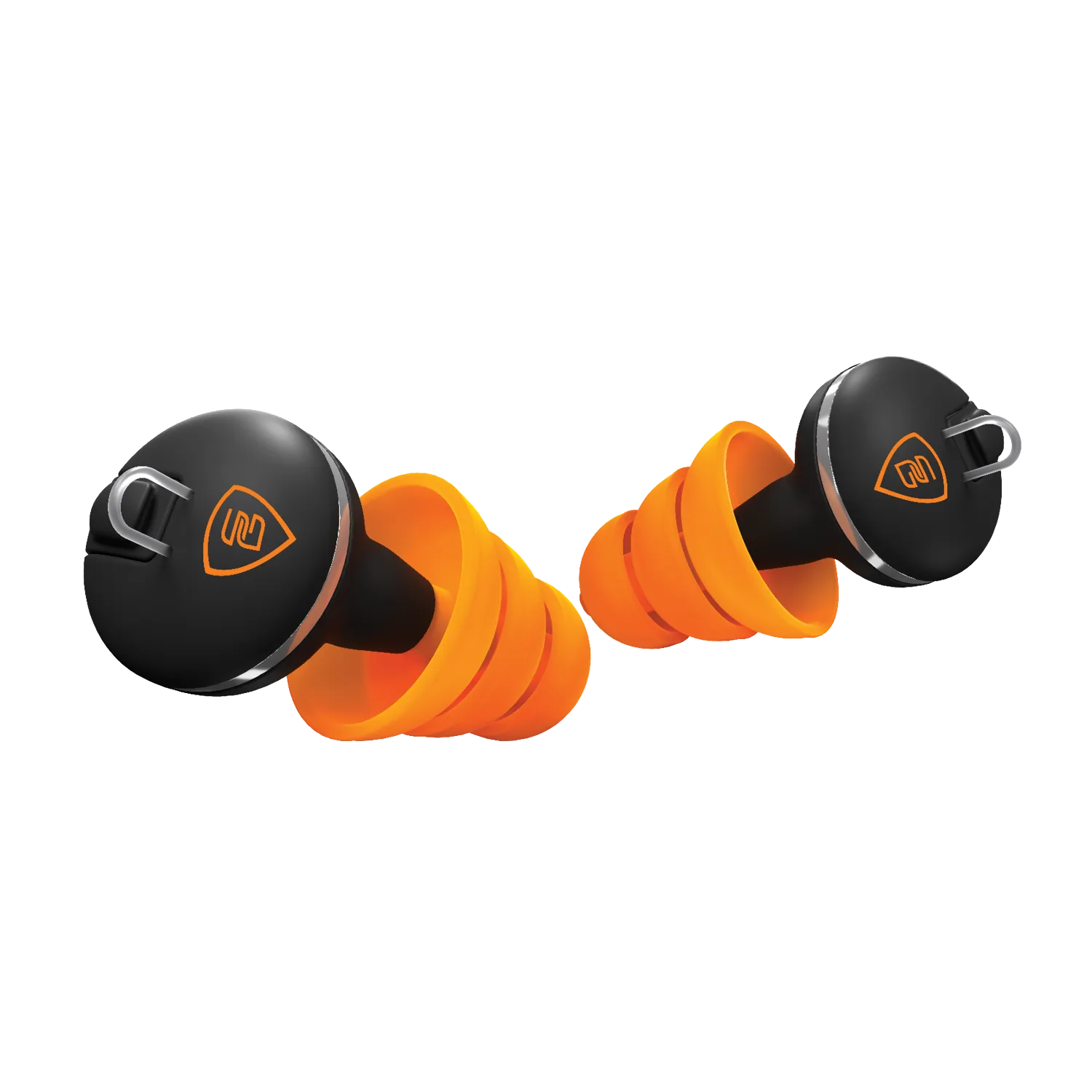
Earpieces molded to your own ears for shooting, motorcycling, music, industry, swimming and sleep. Fitted here in Marietta.
How we choose a style with you
In this order. How it looks is genuinely last, because it is the one constraint we can usually work around.
- Your audiogram. Severe high-frequency loss needs more output than an invisible device can deliver without feedback. That rules some styles out on the spot.
- Your hands and eyes. If arthritis, tremor or low vision makes a size-10 battery impossible, we do not fit a device that needs one. This is the most common reason a well-chosen device ends up in a drawer.
- Your ear canal. Narrow or sharply curved canals, or a history of drainage, change what will fit and stay healthy.
- Where you need to hear. Heavy phone and television use points to Bluetooth. A quiet home life needs far less automation than a busy job.
- How visible you want it. Real, and we respect it. It is a constraint we design around rather than the starting point.
A note on invisible devices
Invisible devices are genuinely discreet, and for some people that is what gets them to wear anything at all. Just know the trade: smaller means less battery, harder handling, more wax problems and a lower ceiling on power. Plenty of patients choose a receiver-in-canal device instead once they hold both in their hand.
Which hearing aid style is most popular?
Receiver-in-canal (RIC) is the most commonly fitted style today. It is discreet, comfortable, available with rechargeable batteries and Bluetooth, and it covers mild through severe hearing loss.
Are invisible hearing aids as good as larger ones?
For mild to moderate loss they can perform very well. They cannot deliver the output that severe loss requires, and their small size limits battery life and features. Fitting quality matters more than size in either case.
Which hearing aid style is easiest to handle?
Behind-the-ear and in-the-ear models. They are physically larger with bigger controls and easier insertion, which matters far more than most people expect until they try the alternative.
Do all styles come with Bluetooth and rechargeable batteries?
Most receiver-in-canal and behind-the-ear models do. The smallest in-canal styles usually cannot house a rechargeable cell or a Bluetooth radio, so if either feature matters to you it narrows the choice.
Can I try more than one style before deciding?
Come in and hold them. Feeling the size difference and trying insertion in the office tells you more in two minutes than any amount of reading. Georgia also provides a cancellation period on hearing aid purchases, and we will put the exact trial terms in writing before you order.
Not sure which style suits you?
A consultation takes about 45 minutes. You will leave knowing your audiogram and which styles are genuinely on the table for your hearing.