
Flying With Hearing Aids: Airport Security and Air Travel Tips
You can wear hearing aids through airport security and for the entire flight. Security officers do not require you to remove them, and hearing aids are...
October 30, 2026 · 7 min read
145 N Marietta Pkwy NE, Suite E, Marietta, GA 30060
Hearing health
By Mark Stevenson, Hearing Instrument Specialist · October 30, 2026 · 7 min read
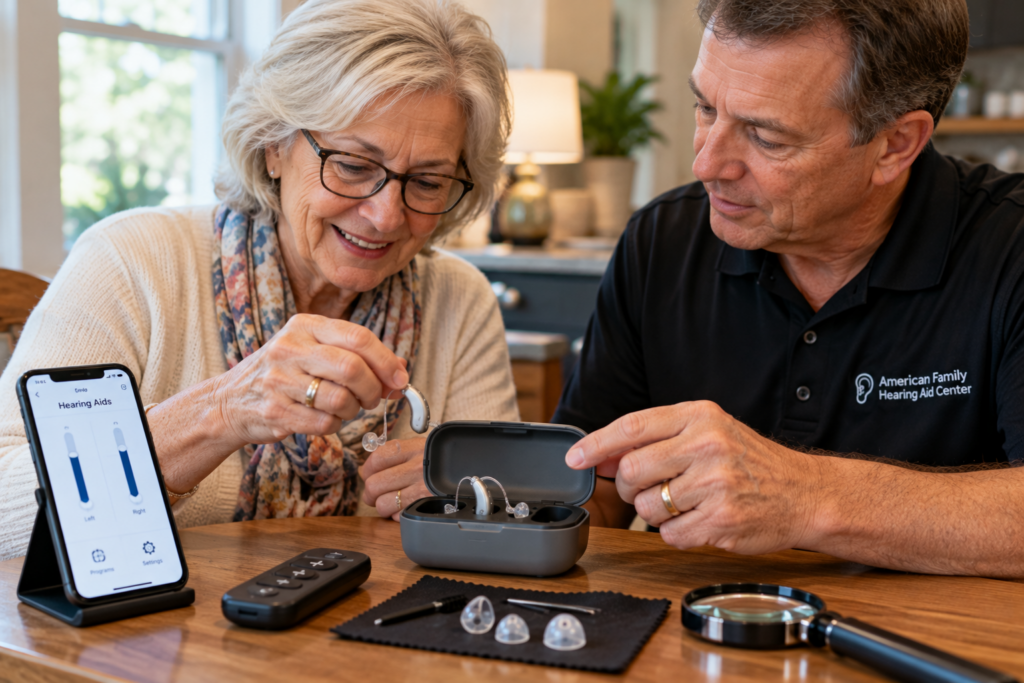
People with arthritis or low vision usually do best with rechargeable hearing aids, slightly larger receiver-in-canal or behind-the-ear styles, and smartphone or remote controls instead of tiny buttons. Skipping small disposable batteries removes the hardest daily task. At American Family Hearing Aid Center in Marietta, GA, Mark Stevenson tests how easily you handle devices during your hearing aid fitting and can show you rechargeable hearing aids in person.
Why Do Arthritis and Low Vision Make Hearing Aids Harder to Use?
Hearing aids ask a lot of your fingers and eyes. A size 10 battery is about the width of a pencil eraser, wax filters are smaller still, and inserting a dome into the ear canal takes a steady, precise movement. For someone with arthritis in the hands, a tremor or macular degeneration, those small daily tasks can turn hearing aids into a frustration.
When handling is difficult, people often stop wearing their hearing aids altogether, not because the devices do not help, but because putting them in becomes a chore. The good news is that the right style and features remove most of that difficulty, and handling should be part of choosing a hearing aid, not an afterthought.
Which Hearing Aid Styles Are Easiest to Handle?
Smaller is not always better. The tiniest in-canal devices are discreet, but they are also the hardest to grip, insert and remove. For limited dexterity or vision, these styles are usually easier:
You can compare all of them on our hearing aid styles page. Holding a demonstration device in your own hand is the quickest way to know which one works for you.
Why Are Rechargeable Hearing Aids Easier for Stiff Fingers?
Changing disposable batteries is the hardest daily task for most people with arthritis. Peeling a tiny tab, finding the plus side and fitting the battery into a small door takes fine finger control. Rechargeable hearing aids remove that step completely: you drop them into a charging case at night and lift them out in the morning.
Rechargeable options now include receiver-in-canal, behind-the-ear and many custom in-ear models. Our rechargeable hearing aids page explains how long a charge lasts and what to expect over the life of the device.
Can You Control Hearing Aids Without Small Buttons?
Yes. Many current hearing aids adjust automatically to different environments, so you rarely need to change settings at all. When you do, there are easier ways than pressing a tiny button behind your ear:
Phone apps also connect to features like streaming calls directly to your hearing aids. Our Bluetooth hearing aids page covers what each connection can do.
How Can Color Coding and Simple Tools Help With Low Vision?
How Can Family Members or Caregivers Help?
Bringing a spouse, adult child or caregiver to the fitting is one of the most helpful things you can do. They can learn how to insert, clean and charge the devices, and they can be added to the hearing aid app to help adjust settings. If a parent is reluctant to admit there is a problem in the first place, our article on talking to a parent about hearing loss offers a gentler approach.
Set up a simple routine together: the charger always in the same place, the cleaning tools beside it, and a check of the domes on the same day each week. A routine that relies on habit rather than memory keeps hearing aids in use.
What Should You Ask for at Your Hearing Aid Fitting?
A professional clean and check changes filters and domes, checks the sound and takes care of the fiddly parts in about fifteen minutes.
Can Hearing Aids Give Spoken Alerts Instead of Beeps?
Many current hearing aids can announce changes in plain words, such as a program name or a low battery warning, instead of a series of beeps that is easy to confuse. For anyone with low vision, spoken alerts are far easier than checking a phone screen or remembering what each tone means.
Ask about voice prompts at your fitting. They can usually be switched on, adjusted in volume, or turned off if you prefer quieter devices.
What If Your Hands or Vision Change After Your Fitting?
Arthritis can flare, and conditions like macular degeneration often progress gradually. A hearing aid that suited you two years ago may become harder to handle. That is not a reason to stop wearing it, and it is worth mentioning at any visit.
Small changes often help: switching to rechargeable devices, adding a remote control, moving to a larger style at your next upgrade, or bringing a family member into the routine. Hearing aids work best when they fit your life as it is today.
Find Hearing Aids That Are Easy for You to Use
The right hearing aid is one you can put in every morning without help or frustration. Call 770-590-8662 or schedule a consultation at our Marietta office, 145 N Marietta Pkwy NE, Suite E. Directions and parking are on our Marietta location page.
Rechargeable receiver-in-canal or behind-the-ear hearing aids are usually easiest, because they are large enough to grip and need no battery changes. The best choice depends on your hearing loss and how your hands feel on a given day.
Usually not. The smallest in-canal devices are hard to grip, insert and remove, and most still use tiny disposable batteries. A slightly larger style is often a better fit for daily use.
Yes. Many hearing aids adjust automatically, and you can change volume or programs with a smartphone app or a handheld remote control instead of small buttons.
Hearing aids are marked red for the right ear and blue for the left. If the markings are hard to see, we can add larger color dots or show you another way to tell them apart.
For many seniors, yes. Removing battery changes is the single biggest improvement for people with arthritis, tremors or low vision, and an overnight charge covers a full day.
Yes, and we encourage it. Bring them to your fitting so they can learn how to insert, clean and charge the devices, and they can be added to the app if you would like help adjusting settings.
A clean and check every few months keeps filters and domes fresh and catches problems early. An annual hearing test makes sure the settings still match your hearing.
Yes. Calls can stream straight to compatible hearing aids, so you hear the caller in both ears, and phone accessibility settings can enlarge text or read it aloud.
Hearing Instrument Specialist with more than 25 years in hearing healthcare, and the person who runs every hearing test, fitting and adjustment at American Family Hearing Aid Center in Marietta. A Hearing Instrument Specialist tests hearing and fits hearing aids. We do not diagnose medical ear conditions, and we refer to a physician when something needs one.
This article is general information, not medical advice about your own hearing. If you have sudden hearing loss, one-sided loss, ear pain or drainage, contact a doctor promptly.
You can wear hearing aids through airport security and for the entire flight. Security officers do not require you to remove them, and hearing aids are...
October 30, 2026 · 7 min read
Hearing aid domes are the small silicone tips that hold the speaker in your ear canal. Open domes suit milder high-frequency loss, closed or tulip domes...
October 30, 2026 · 7 min read
Most people should not sleep with hearing aids in. Overnight wear keeps the ear canal warm and damp, can cause soreness and whistling against the pillow,...
October 30, 2026 · 7 min read
A consultation takes about 45 minutes, and you leave with an audiogram and a plain explanation of it.