
Flying With Hearing Aids: Airport Security and Air Travel Tips
You can wear hearing aids through airport security and for the entire flight. Security officers do not require you to remove them, and hearing aids are...
October 30, 2026 · 7 min read
145 N Marietta Pkwy NE, Suite E, Marietta, GA 30060
Hearing health
By Mark Stevenson, Hearing Instrument Specialist · October 30, 2026 · 7 min read
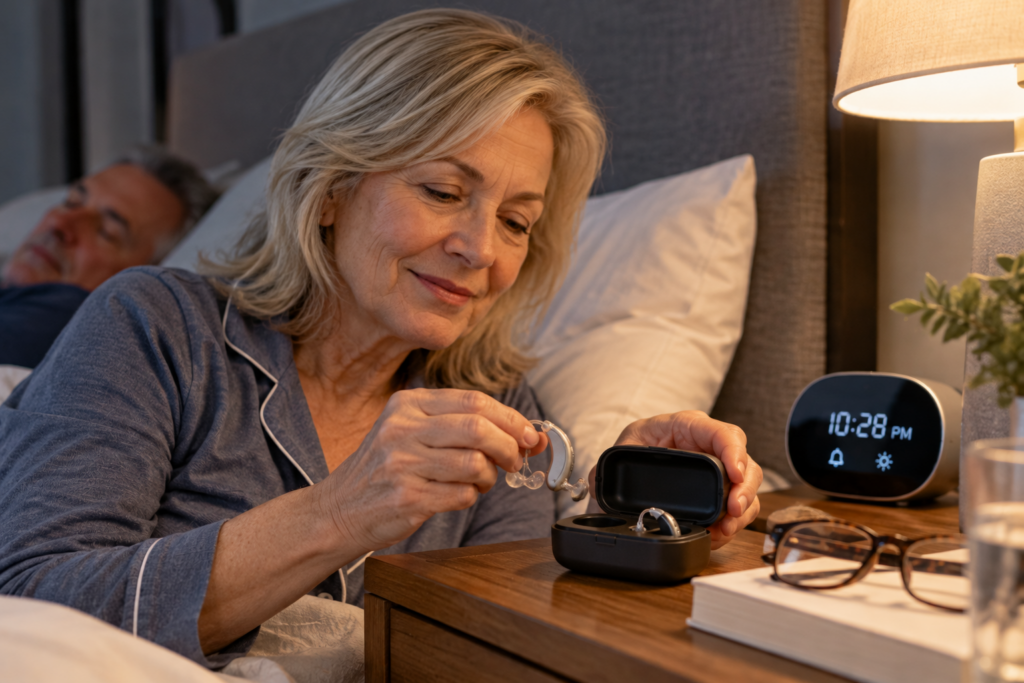
Most people should not sleep with hearing aids in. Overnight wear keeps the ear canal warm and damp, can cause soreness and whistling against the pillow, and skips the nightly charge or drying your device needs. If you worry about hearing alarms, vibrating and flashing alerts are safer options. American Family Hearing Aid Center in Marietta, GA helps with tinnitus care at night and hearing aid cleaning.
Is It Safe to Sleep With Hearing Aids In?
Falling asleep in your hearing aids once is not dangerous, and it happens to almost everyone during the first few months. Doing it every night is a different matter. Most hearing aids are designed to be worn during waking hours and taken out at night, both for the health of your ears and for the life of the devices.
The good news is that taking them out does not have to mean feeling cut off at night. The concerns that make people want to keep them in, like hearing an alarm or managing tinnitus, all have better solutions.
Why Should You Take Hearing Aids Out at Night?
How Can You Hear Alarms Without Hearing Aids at Night?
This is the most common reason people want to sleep in their hearing aids, and it is a good reason to plan ahead. Several devices are made specifically for people with hearing loss:
If you live alone, a vibrating smoke alarm system is worth setting up first. A standard alarm may not wake you without your hearing aids in.
How Can You Manage Tinnitus at Night Without Your Hearing Aids?
Tinnitus often feels loudest in a quiet bedroom, which is why some people sleep in their hearing aids to cover it. Low background sound does the same job without the downsides: a fan, a bedside sound machine, a sleep app or a pillow speaker can all soften the contrast that makes ringing stand out.
If tinnitus regularly keeps you awake, our tinnitus care service looks at the options that have evidence behind them. Our article on why your ears are ringing explains the most common causes.
What Is the Best Bedtime Routine for Hearing Aids?
For a deeper clean, a professional clean and check takes about fifteen minutes and prevents most of the repairs we see.
Are There Hearing Aids Designed to Be Worn Overnight?
A small category of extended-wear hearing aids is designed to stay in the ear around the clock for weeks at a time. They are placed deep in the canal by specially trained providers and replaced on a schedule. They are not suitable for every ear or every hearing loss, so they are worth discussing only after a full hearing evaluation.
Should You Wear Hearing Aids During Naps or Hospital Stays?
A short nap sitting upright is usually fine. If you lie down on your side, take them out for comfort and to avoid losing one in the cushions.
For a hospital stay, bring a labeled case, your charger or spare batteries, and tell the nursing staff that you wear hearing aids. Ask them to place the devices in the case when you sleep, so they are not lost with bedding.
How Do You Talk With Your Partner After Hearing Aids Come Out?
Bedtime conversation is one of the reasons people leave their hearing aids in too long. A few small changes make it easier without wearing them to bed:
What If You Need to Get Up During the Night?
Many people get up at least once a night, whether for the bathroom, a crying grandchild or a pet that needs to go out. Keeping your hearing aids in their case on the nightstand, rather than in another room, means you can put one in within seconds if you need to talk to someone or listen for something.
Good lighting matters as much as hearing at night. A plug-in nightlight along the route to the bathroom helps you move safely, and a flashing or vibrating phone alert can tell you when someone is at the door without you needing to hear the bell.
Why Do Hearing Aids Need a Rest Too?
Hearing aids spend the day in a warm, humid ear canal, collecting moisture and wax. A night in a dry case lets moisture evaporate before it reaches the electronics, and it gives you a regular moment to check the dome, filter and battery door. Devices that get that nightly break tend to last longer and need fewer repairs.
Your ears benefit in the same way. Eight hours without a device lets the skin of the canal breathe and lets wax move toward the opening naturally, which reduces buildup behind the dome over time.
Talk to Us About Hearing Better at Night
If nighttime is where you struggle most, with alarms, tinnitus or a partner who snores, we can help you build a plan that works without wearing hearing aids to bed. Call 770-590-8662 or schedule a consultation at our Marietta office, 145 N Marietta Pkwy NE, Suite E. Directions and parking are on our Marietta location page.
No. Falling asleep in them occasionally does no lasting harm. Take them out when you wake, let your ears rest, and put the devices in their charger or dry case.
Wearing them overnight regularly can raise the risk. The ear canal stays warm and moist without a break, which can irritate the skin and encourage infection. Giving your ears a rest each night is the safest habit.
Use a vibrating alarm clock with a bed shaker, set your phone to flash and vibrate, and add a strobe or vibrating accessory to your smoke alarms. These are designed for people with hearing loss.
Yes. Dogs are attracted to the scent of hearing aids, and chewing is one of the most common causes of damage we see. Store them in a closed case, up high, every night.
Yes, for most people. An overnight charge gives a full day of use, and making it part of your bedtime routine means you never start the day with low power.
A short nap sitting upright is usually fine. If you lie on your side or nap for longer, take them out to avoid soreness, whistling and losing a device in the cushions.
Bring a labeled case and your charger or spare batteries, and tell the staff you wear hearing aids. Ask them to store the devices in the case when you sleep.
Yes. Soft custom sleep earplugs are shaped to be comfortable when lying on your side, and they are a popular choice for partners of snorers and light sleepers.
Hearing Instrument Specialist with more than 25 years in hearing healthcare, and the person who runs every hearing test, fitting and adjustment at American Family Hearing Aid Center in Marietta. A Hearing Instrument Specialist tests hearing and fits hearing aids. We do not diagnose medical ear conditions, and we refer to a physician when something needs one.
This article is general information, not medical advice about your own hearing. If you have sudden hearing loss, one-sided loss, ear pain or drainage, contact a doctor promptly.
You can wear hearing aids through airport security and for the entire flight. Security officers do not require you to remove them, and hearing aids are...
October 30, 2026 · 7 min read
People with arthritis or low vision usually do best with rechargeable hearing aids, slightly larger receiver-in-canal or behind-the-ear styles, and smartphone or remote controls instead of...
October 30, 2026 · 7 min read
Hearing aid domes are the small silicone tips that hold the speaker in your ear canal. Open domes suit milder high-frequency loss, closed or tulip domes...
October 30, 2026 · 7 min read
A consultation takes about 45 minutes, and you leave with an audiogram and a plain explanation of it.