How Often Should You Have Your Ears Checked and Cleaned?
By admin, Hearing Instrument Specialist · September 29, 2026 · 5 min read
Most people’s ears are self-cleaning and never require professional intervention. However, hearing aid users, older adults, and those with narrow or curved canals often benefit fromprofessional ear cleaningevery three to six months.American Family Hearing Aid CenterinMarietta, GAcombines ear cleaning withhearing evaluationsso patients get accurate results and a clear picture of their ear health in one visit.
The Ear’s Self-Cleaning System
The human ear is remarkably good at taking care of itself. The ear canal is lined with skin that slowly migrates outward, a process called epithelial migration, carrying debris and dried wax toward the opening of the ear where it can exit naturally. For most people, this process works quietly and without any need for intervention throughout their lives. When it does not, professional ear cleaning at American Family Hearing Aid Center is the safe and effective solution.
This is why ear cleaning is not a routine maintenance task for most people the way teeth cleaning is. The ear does its own maintenance. The problems arise when something disrupts this natural process or when wax is produced faster than it can migrate out.
Who Needs More Frequent Ear Cleaning
Certain groups are more likely to experience wax accumulation that requires professional attention.
Hearing aid users are at elevated risk because hearing aids block the natural outward migration of wax. As wax builds up behind the hearing aid dome or earmold, it becomes impacted rather than migrating naturally to the outer ear. This is the most common group that benefits from scheduled ear cleaning.
Older adults tend to produce drier, more brittle wax that does not migrate as easily, and the ear canal’s self-cleaning mechanism becomes less efficient with age. Regular professional cleaning may be appropriate for many older patients.
People with narrow, curved, or hairy ear canals have anatomical features that impede natural wax migration. Wax gets stuck at curves or accumulates around hair follicles rather than moving toward the exit.
People who use earbuds or in-ear monitors regularly face the same blockage problem as hearing aid users. Earbuds prevent wax from migrating outward, increasing the likelihood of impaction over time.
Recommended Cleaning Frequency by Group
For the general adult population with no risk factors, professional ear cleaning is needed only when symptoms suggest impaction. There is no standing schedule to follow.
For hearing aid users, a cleaning check at least every six months is a reasonable baseline, though some patients need more frequent cleaning depending on how much wax they produce and the style of hearing aid they wear. The team at American Family Hearing Aid Center can recommend a frequency based on each patient’s individual pattern.
For older adults who have previously experienced impaction, scheduling ear cleaning every three to six months is generally appropriate. Having the ears examined at each hearing evaluation ensures that any new buildup is caught promptly.
How Professional Ear Cleaning Works
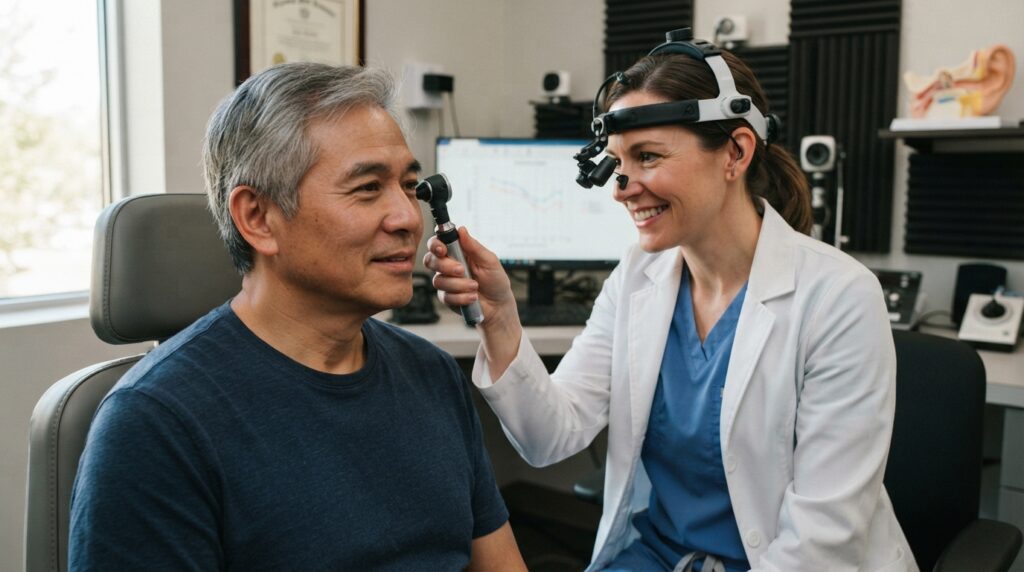
At American Family Hearing Aid Center in Marietta, ear cleaning begins with a visual examination using an otoscope to assess whether wax is present and, if so, its location, consistency, and extent.
If wax removal is appropriate, the provider selects the method best suited to what is observed. Irrigation with warmed water is comfortable and effective for soft or fluid wax. Manual curette removal is used for harder or more impacted wax. Suction may be used in specific cases, particularly for patients who should not have irrigation due to a history of ear surgery or perforated eardrum.
The procedure is quick, typically taking five to fifteen minutes per ear, and patients generally notice an immediate improvement in sound clarity and the relief of fullness or pressure.
Combining Ear Cleaning With a Hearing Test
For patients who are due for both ear cleaning and a hearing evaluation, combining both in the same visit is practical and important for accuracy. An audiogram performed with significant earwax in the canal may show a false conductive hearing loss that does not reflect the actual state of the inner ear.
American Family Hearing Aid Center routinely examines the ears before proceeding with audiometric testing and cleans as needed before the hearing test begins. This ensures every hearing evaluation produces results that genuinely reflect the patient’s hearing ability.
Contact the clinic to schedule ear cleaning, a hearing evaluation, or both in one visit.
Frequently Asked Questions
Do most people need to have their ears professionally cleaned?
No. Most people’s ears are self-cleaning and never require professional wax removal. Those who produce excessive wax, have narrow or curved canals, or wear hearing aids regularly are more likely to need periodic professional cleaning.
How can I tell if I need my ears cleaned?
Signs include a feeling of fullness in the ear, muffled hearing, itching, earache, or the sense that a hearing aid is not working as well as usual. A visual examination by the team at American Family Hearing Aid Center is the most reliable way to determine whether buildup is present.
What happens if earwax is not removed?
In people who do not accumulate excessive wax, nothing harmful happens as the ear clears naturally. In those with wax accumulation, untreated impaction can lead to significant hearing reduction, ear pain, tinnitus, and increased risk of ear infections.
Are ear candling or at-home irrigation kits safe?
Ear candling is not supported by clinical evidence and is not safe. At-home irrigation kits can be used by some adults for mild buildup but are not appropriate for everyone and carry injury risk if used incorrectly. Professional cleaning is always the safest option.
Can I get my ears cleaned and my hearing tested in the same visit?
Yes. American Family Hearing Aid Center in Marietta offers both services and frequently performs ear cleaning before a hearing evaluation to ensure test results are accurate. Ask about combining both at the time of booking.
Does ear cleaning hurt?
Professional ear cleaning is generally comfortable. Patients may notice a sensation of pressure or temperature during irrigation but the procedure is not painful. If you experience discomfort during the procedure, let the provider know right away.
Mark Stevenson, HIS
Hearing Instrument Specialist with more than 25 years in hearing healthcare, and the person who runs every hearing test, fitting and adjustment at American Family Hearing Aid Center in Marietta. A Hearing Instrument Specialist tests hearing and fits hearing aids. We do not diagnose medical ear conditions, and we refer to a physician when something needs one.
This article is general information, not medical advice about your own hearing. If you have sudden hearing loss, one-sided loss, ear pain or drainage, contact a doctor promptly.
Hearing aids are among the most effective tools for managing tinnitus when hearing loss is also present. By amplifying environmental sound, they reduce the contrast that...
Ringing in the ears, known as tinnitus, is most commonly caused by noise-induced hearing loss, age-related hearing changes, or earwax buildup. American Family Hearing Aid Center...
Custom ear molds are precisely fitted devices made from a silicone impression of an individual's ear canal. They are used for hearing aids, ear protection, musician's...
September 29, 2026 · 5 min read
Find out where your hearing actually stands
A consultation takes about 45 minutes, and you leave with an audiogram and a plain explanation of it.