How Often Should You Get a Hearing Test in Marietta, GA?
By admin, Hearing Instrument Specialist · September 29, 2026 · 5 min read
Adults with no risk factors should have ahearing testevery three to five years, and annually once they are over 60 or have noise exposure, family history, or medication-related risks.American Family Hearing Aid CenterinMarietta, GAoffers comprehensive hearing evaluations for all ages, with no referral required.Schedule yours today.
Why Regular Hearing Tests Matter More Than Most People Realize
Hearing loss is one of the most common and most underdiagnosed health conditions in the United States. According to the National Institutes of Health, approximately one in three people between the ages of 65 and 74 have some degree of hearing loss, yet the average person waits seven to ten years after first noticing a change before seeking evaluation. That delay has real consequences.
Untreated hearing loss is associated with social isolation, cognitive decline, depression, and a reduced quality of life. Yet the condition often progresses so gradually that people adapt around it without realizing how much they are missing. By the time hearing loss becomes impossible to ignore, it has often been present for years. A comprehensive hearing evaluation at American Family Hearing Aid Center is the only way to know for certain where your hearing stands.
Regular hearing evaluations at American Family Hearing Aid Center in Marietta catch changes early, before they affect daily life in significant ways, and give patients time to make informed decisions about their hearing health.
Recommended Hearing Test Frequency by Age
Newborns: Universal newborn hearing screening is conducted before hospital discharge. Early identification of hearing loss in infants is critical for speech and language development.
Ages 3 to 11: Hearing screenings are typically included in routine well-child visits. Any concerns from parents or teachers about listening, attention, or speech should prompt a comprehensive evaluation.
Ages 12 to 18: Teens are at increasing risk from noise exposure through earbuds and concert attendance. Annual screenings are recommended for teens with these exposures.
Ages 18 to 49: Adults with no risk factors can typically follow a hearing test schedule of every three to five years. Adults with occupational noise exposure, a family history of hearing loss, or regular use of ototoxic medications should be evaluated more frequently.
Ages 50 to 59: A baseline comprehensive hearing evaluation is strongly recommended by age 50, even for those with no symptoms. Testing every two to three years is generally advised in this decade. Schedule your baseline evaluation at American Family Hearing Aid Center.
Ages 60 and older: Annual hearing evaluations are recommended. Hearing loss accelerates with age, and changes can happen quickly. Annual testing also allows for timely adjustments to hearing aids for patients who already wear them.
Risk Factors That Warrant More Frequent Testing
Certain individuals should be tested more frequently regardless of age. If any of the following apply, annual hearing evaluations are advisable:
Occupational noise exposure from manufacturing, construction, military service, agriculture, or entertainment. Regular use of ototoxic medications including some chemotherapy drugs, certain antibiotics, and high-dose aspirin. A family history of hearing loss. A history of ear infections, surgeries, or trauma. Any experience of tinnitus, ear fullness, or sudden hearing changes.
If you are unsure whether your situation calls for more frequent testing, the team at American Family Hearing Aid Center can help you assess your individual risk and recommend an appropriate evaluation schedule.
What Happens During a Hearing Test
A comprehensive hearing evaluation at American Family Hearing Aid Center begins with a case history review. The provider will ask about your medical history, noise exposure, any symptoms you have noticed, and your communication concerns.
Next, the ear canals are examined visually to check for earwax buildup, infections, or other physical conditions that could affect hearing or need to be addressed before testing. This brief examination can also identify earwax impaction that may be contributing to hearing difficulty.
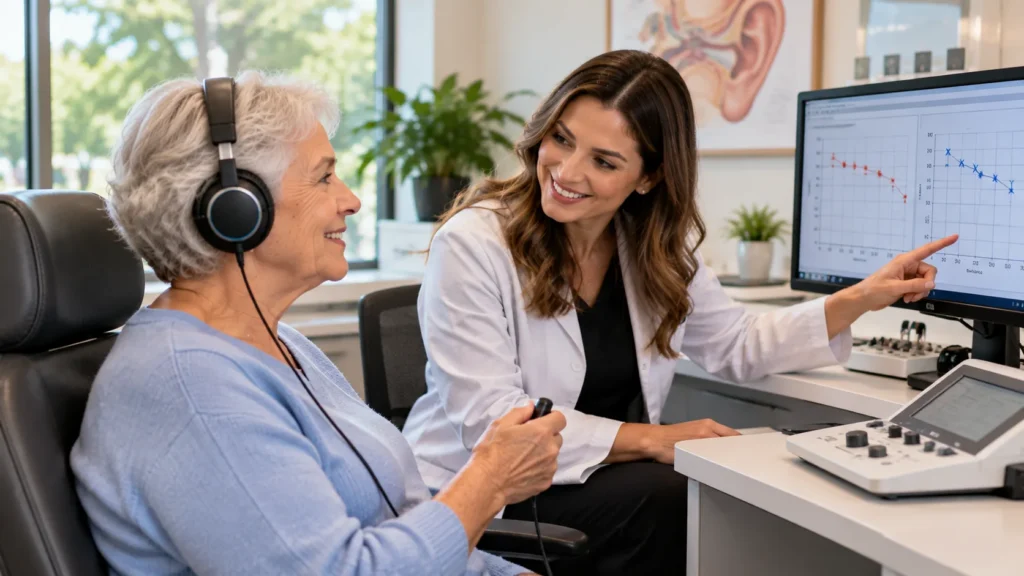
The hearing test itself involves listening to tones through headphones at various frequencies and volumes and indicating when you hear them. Speech recognition testing may also be conducted to evaluate how clearly you can understand words at different volumes. The results are plotted on an audiogram, which the provider reviews with you in detail along with any recommended next steps.
Signs You Should Not Wait for Your Next Scheduled Test
Between scheduled evaluations, pay attention to changes that suggest you should schedule a sooner appointment. These include asking people to repeat themselves frequently, difficulty hearing in background noise, turning the television volume up higher than other household members prefer, or missing parts of conversations in quiet settings.
Sudden hearing loss or a rapid change in hearing ability should be treated as a medical urgency. Contact American Family Hearing Aid Center promptly if you experience a sudden drop in hearing, as early intervention significantly improves outcomes in these cases.
Scheduling a Hearing Test in Marietta
American Family Hearing Aid Center has served Marietta and the surrounding communities since 2018. The Marietta location offers comprehensive hearing evaluations, hearing aid fittings, repair services, ear cleaning, and tinnitus consultations. No physician referral is required to schedule a hearing test.
Read what patients are saying on the reviews page, or contact the team to schedule your hearing evaluation today.
Frequently Asked Questions
How often should adults get a hearing test?
Adults with no known hearing issues should have a baseline hearing test by age 50 and then every three to five years. Those with risk factors such as noise exposure, family history, or certain medications should be tested annually or as recommended by their provider.
At what age should children first have a hearing test?
Newborns are screened before leaving the hospital. Children should have follow-up hearing screenings at well-child visits and any time a parent or teacher notices concerns about listening, speech, or language development.
Can I get a hearing test without a referral in Marietta, GA?
Yes. American Family Hearing Aid Center in Marietta welcomes patients without a physician referral. You can schedule a hearing test directly through the clinic at any time.
How long does a hearing test take?
A comprehensive hearing evaluation typically takes 45 to 60 minutes, including a case history review, physical examination of the ear canal, and a series of listening tests to measure hearing thresholds across different frequencies.
Will my insurance cover a hearing test?
Coverage varies by plan. Many insurance plans cover diagnostic hearing evaluations when medically indicated. Contact American Family Hearing Aid Center and the team can help verify your benefits before your appointment.
Is a hearing test painful?
No. A hearing test is completely painless and non-invasive. You will listen to tones through headphones and respond when you hear them. The test is comfortable for all ages.
Mark Stevenson, HIS
Hearing Instrument Specialist with more than 25 years in hearing healthcare, and the person who runs every hearing test, fitting and adjustment at American Family Hearing Aid Center in Marietta. A Hearing Instrument Specialist tests hearing and fits hearing aids. We do not diagnose medical ear conditions, and we refer to a physician when something needs one.
This article is general information, not medical advice about your own hearing. If you have sudden hearing loss, one-sided loss, ear pain or drainage, contact a doctor promptly.
Hearing aids are among the most effective tools for managing tinnitus when hearing loss is also present. By amplifying environmental sound, they reduce the contrast that...
Ringing in the ears, known as tinnitus, is most commonly caused by noise-induced hearing loss, age-related hearing changes, or earwax buildup. American Family Hearing Aid Center...
Custom ear molds are precisely fitted devices made from a silicone impression of an individual's ear canal. They are used for hearing aids, ear protection, musician's...
September 29, 2026 · 5 min read
Find out where your hearing actually stands
A consultation takes about 45 minutes, and you leave with an audiogram and a plain explanation of it.