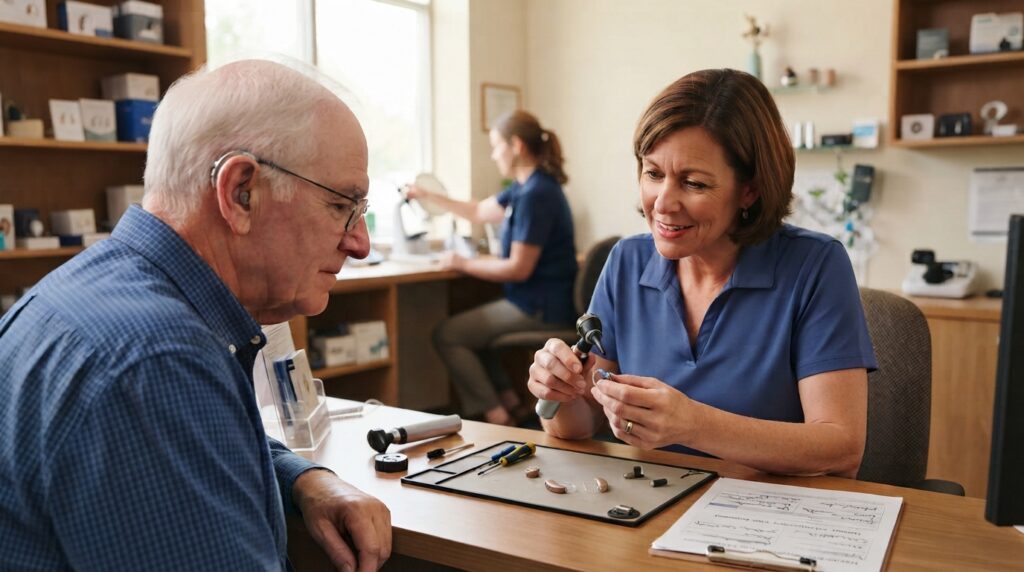
When a hearing aid malfunctions or stops performing the way it used to, most patients face the same question: is it time to fix this or replace it? The answer is not always obvious, and getting it wrong in either direction wastes money. Repairing a device that is nearing the end of its useful life can mean spending money on a short-term fix. Replacing a device that could be inexpensively repaired means an unnecessary expense when repair was the better option.
The good news is that the decision is not complicated once you know what to weigh. This guide walks through the key factors, and the team at American Family Hearing Aid Center in Marietta is available to assess your specific situation and give you a clear recommendation.
Factor 1: The Age of the Device
Device age is the most important starting point. Modern hearing aids are built to last three to seven years with proper care, though many devices continue functioning well beyond that range with regular maintenance. As a general rule:
A device that is under three years old should almost always be repaired rather than replaced, assuming the problem is fixable. The investment in the device is still relatively recent, and newer technology is unlikely to justify the full cost of replacement so soon.
A device between three and five years old warrants a cost comparison. Repair may be a solid choice if the problem is straightforward. If the repair cost approaches or exceeds what a newer device would provide in improved performance, replacement makes more sense.
A device over five to seven years old is a candidate for replacement in most cases, particularly if the repair cost is significant. Technology advances in hearing aids have been substantial over the past five years, and patients often experience a meaningful improvement in speech clarity, Bluetooth connectivity, and noise management when moving to a current-generation device.
Factor 2: The Repair Cost Compared to Replacement Cost
A practical benchmark: if the repair cost is less than 25 to 30 percent of the cost of a comparable replacement device, repair is generally a sensible choice regardless of age. If the repair cost approaches or exceeds half the cost of a new device, replacement deserves serious consideration.
Most minor in-house repairs are low cost. Major repairs sent to the manufacturer involve higher costs and vary by make, model, and the nature of the damage. The team at American Family Hearing Aid Center will assess the device and provide a cost estimate so you can make an informed comparison.
Factor 3: Whether the Device Is Under Warranty
Many hearing aids come with a one-to-three-year manufacturer’s warranty that covers defects and malfunction. If your device is within its warranty period, repair may be covered at no cost or minimal cost. Extended warranty plans may also cover repair beyond the standard term. Before paying for any repair, the team will check whether your device qualifies for warranty service.
Factor 4: Whether Your Hearing Has Changed
A hearing aid programmed to a hearing loss from five years ago may not be the right fit for your hearing today. Hearing loss is progressive in most cases, and a device that was appropriate at the time of fitting may now be underperforming not because of malfunction but because your hearing needs have changed.
If you cannot remember when you last had a hearing test, it makes sense to be tested before deciding between repair and replacement. A current audiogram tells you whether your existing device, if repaired, would still be programmed appropriately for your current hearing thresholds. If the loss has progressed significantly, a new fitting on a new device is likely the better path.
Factor 5: The Performance Gap With Newer Technology
Hearing aid technology improves meaningfully from generation to generation. Current-generation devices offer substantially better speech-in-noise performance, more natural sound quality, rechargeable battery systems, direct Bluetooth streaming from smartphones, and app-based control that older devices simply did not have.
If your device is five or more years old, upgrading to a current model may provide noticeably better hearing outcomes even before factoring in the malfunction. The hearing aids page outlines the range of styles and technologies available at American Family Hearing Aid Center.
Getting an Honest Assessment in Marietta
The team at American Family Hearing Aid Center will evaluate your device, explain what the problem is, provide a repair cost estimate, and give you an honest comparison with what a current replacement device would provide. The goal is always the best outcome for your hearing, not a sale.
Contact the clinic to schedule a repair assessment or to discuss your options.
Frequently Asked Questions
How do I know if my hearing aid is worth repairing?
A hearing aid is generally worth repairing if it is less than five years old, the repair cost is less than half the cost of a comparable new device, and it still meets your current hearing needs. If the device is over five to seven years old or your hearing has changed significantly, replacement may be the better investment.
What is the average cost of hearing aid repair?
Repair costs vary based on the problem and whether the device is under warranty. Minor in-office repairs are typically low cost. Major repairs sent to the manufacturer vary by make, model, and damage type. American Family Hearing Aid Center can provide a cost estimate after assessing the device.
Do hearing aids come with a warranty?
Most new hearing aids include a manufacturer’s warranty covering defects for one to three years, and some include loss and damage coverage. Extended warranty options may also be available. If your device is under warranty, repair or replacement costs may be fully or partially covered.
How often should hearing aids be replaced?
Most hearing aids last three to seven years. Replacement is typically considered when the device is no longer functioning well after repair, when hearing has changed significantly, or when newer technology would meaningfully improve hearing outcomes and quality of life.
Has my hearing changed enough to need a new fitting?
If you have not had a hearing test in two or more years and are noticing changes in how well your aids are performing, a current evaluation is recommended before deciding between repair and replacement. Your hearing may have changed in ways that require a different level of amplification.
Can I use one hearing aid if the other is being repaired?
Yes, though using only one hearing aid reduces spatial awareness and speech understanding in noise. American Family Hearing Aid Center may be able to provide a loaner device during manufacturer repairs, depending on availability.
Mark Stevenson, HIS
Hearing Instrument Specialist with more than 25 years in hearing healthcare, and the person who runs every hearing test, fitting and adjustment at American Family Hearing Aid Center in Marietta. A Hearing Instrument Specialist tests hearing and fits hearing aids. We do not diagnose medical ear conditions, and we refer to a physician when something needs one.
This article is general information, not medical advice about your own hearing. If you have sudden hearing loss, one-sided loss, ear pain or drainage, contact a doctor promptly.
Hearing aids are among the most effective tools for managing tinnitus when hearing loss is also present. By amplifying environmental sound, they reduce the contrast that...
Ringing in the ears, known as tinnitus, is most commonly caused by noise-induced hearing loss, age-related hearing changes, or earwax buildup. American Family Hearing Aid Center...
Custom ear molds are precisely fitted devices made from a silicone impression of an individual's ear canal. They are used for hearing aids, ear protection, musician's...
September 29, 2026 · 5 min read
Find out where your hearing actually stands
A consultation takes about 45 minutes, and you leave with an audiogram and a plain explanation of it.