
Flying With Hearing Aids: Airport Security and Air Travel Tips
You can wear hearing aids through airport security and for the entire flight. Security officers do not require you to remove them, and hearing aids are...
October 30, 2026 · 7 min read
145 N Marietta Pkwy NE, Suite E, Marietta, GA 30060
Hearing health
By Mark Stevenson, Hearing Instrument Specialist · October 30, 2026 · 7 min read
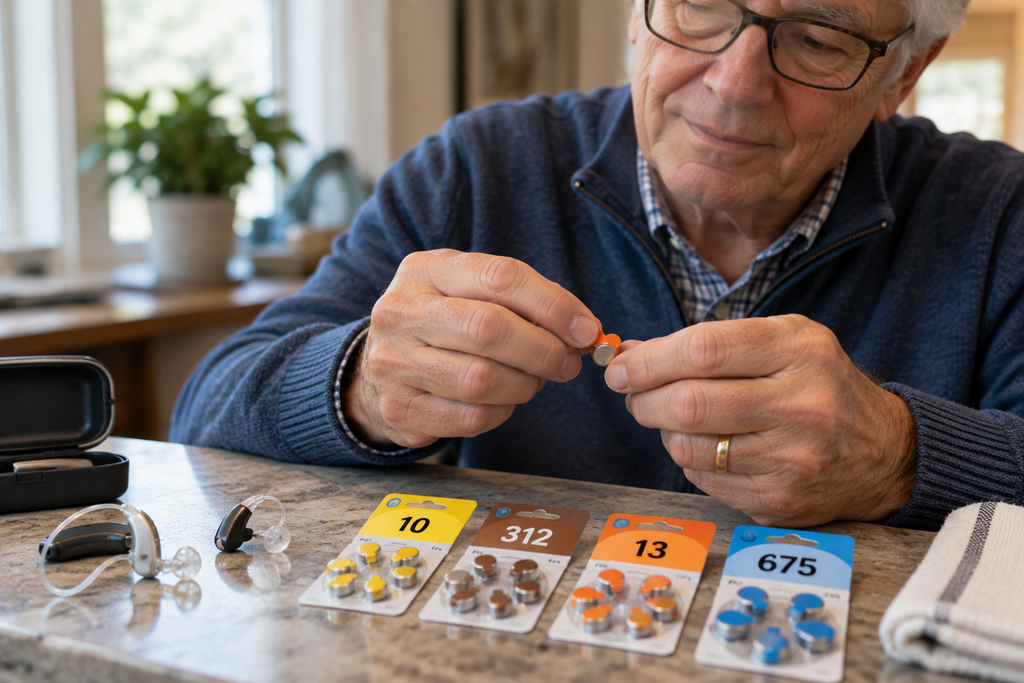
Hearing aid batteries come in four standard sizes, each with a color-coded tab: size 10 (yellow), 312 (brown), 13 (orange) and 675 (blue). Smaller batteries last fewer days, from about 3 to 7 days for size 10 up to roughly 9 to 20 days for size 675. American Family Hearing Aid Center in Marietta, GA stocks hearing aid batteries and supplies and can explain whether rechargeable hearing aids suit you better.
What Are the Four Hearing Aid Battery Sizes?
Disposable hearing aid batteries use a universal system: the number is the size, and the color of the tab on the packaging matches it, whichever brand you buy. That makes it easy to buy the right one, as long as you know your size.
Your size is set by your hearing aid model, not by preference. It is printed on your battery packaging and in your device manual, and we can tell you at any visit.
Why Do Hearing Aid Batteries Last Different Lengths of Time?
The ranges above are wide because battery life depends on how you use your hearing aids as much as on the battery itself. The biggest factors are:
Georgia humidity is hard on batteries and devices alike. Our article on keeping hearing aids working through a Georgia summer explains a simple nightly routine that helps both.
How Do Zinc-Air Hearing Aid Batteries Work?
Nearly all disposable hearing aid batteries are zinc-air. They stay inactive until the colored tab is removed and air reaches the cells inside. That is why a battery can sit in its package for years and still work, but starts draining as soon as the tab comes off, whether or not it is in a hearing aid.
After peeling the tab, wait a minute or two before inserting the battery. This lets air activate it fully and can give you noticeably longer life. Putting the tab back on does not stop a battery from draining once it has been activated.
How Can You Make Hearing Aid Batteries Last Longer?
How Do You Know When a Hearing Aid Battery Is Running Low?
Most hearing aids play a short tone or spoken alert when the battery is getting low, giving you time to swap it before the device stops. Other signs include weaker or distorted sound and a device that cuts in and out. Many people keep a spare battery in a wallet or purse so a warning tone is never a problem.
If new batteries drain unusually fast, or a device still cuts out with a fresh battery, the cause may be moisture, corroded contacts or a fault inside the device. Our guide on why a hearing aid stops working walks through the common causes, and our team can assess it for repair.
Are Hearing Aid Batteries Dangerous for Children and Pets?
Yes. Hearing aid batteries are small enough to swallow, and young children and dogs are both drawn to them. Store new and used batteries out of reach, dispose of used ones promptly, and never leave a battery loose on a table or nightstand.
If a child or pet swallows a battery, treat it as an emergency. Call Poison Help at 1-800-222-1222 right away, or seek emergency care, and contact a veterinarian immediately for pets.
How Do You Change a Hearing Aid Battery?
If small batteries are hard to grip, a magnetic battery tool picks them up and holds them in place, and many people find it easier to change batteries over a soft towel at a table rather than standing up.
How Should You Carry Spare Batteries?
Keep spares in their original card, not loose in a pocket or purse. Loose batteries can touch coins or keys, which drains them and can make them warm. One or two spares in a wallet, car console or bag means a low-battery tone is never a problem, whether you are at church, at work or on the road.
Should You Switch to Rechargeable Hearing Aids?
Rechargeable hearing aids remove battery changes entirely: you place them in a charging case at night and wear them all day. They suit most people, especially anyone who finds small batteries fiddly. Disposable batteries remain a good option for the very smallest in-canal devices, for people who prefer a spare in their pocket, and for older devices you are happy with. Our rechargeable hearing aids page compares the two in detail.
Where Can You Buy Hearing Aid Batteries in Marietta?
American Family Hearing Aid Center stocks premium hearing aid batteries in every size, along with domes, wax filters and other hearing aid accessories. You do not need an appointment for supplies during opening hours. Call 770-590-8662 or schedule a consultation at our Marietta office, 145 N Marietta Pkwy NE, Suite E. Directions and parking are on our Marietta location page.
Yes, the size is universal, so any size 312 battery fits a device that takes 312. Quality and consistency vary between brands, which is why some batteries last longer than others in the same hearing aid.
No. Each size has a different diameter and thickness, so only the size your hearing aid is designed for will fit and work safely. Check your packaging or manual, or ask us.
It depends on the size and how you use your devices. A typical wearer with smaller batteries can use around 100 batteries per pair each year, while larger sizes last longer and need fewer.
Yes. Unopened zinc-air batteries keep well for several years, but they slowly lose capacity. Check the date on the package when you buy, and use older stock first.
No. Cold and condensation can damage zinc-air batteries and shorten their life. Store them at room temperature in their original packaging.
Heavy Bluetooth streaming, long wearing hours, powerful amplification and humidity all shorten battery life. If batteries drain much faster than usual, have the device checked for moisture or a fault.
Keep used batteries away from children and pets, and follow local recycling guidance for button batteries. You can bring used batteries to our office and ask how best to recycle them.
Most cannot, because they use a sealed rechargeable cell. A few models accept either, so check your device or ask us before you buy batteries.
Hearing Instrument Specialist with more than 25 years in hearing healthcare, and the person who runs every hearing test, fitting and adjustment at American Family Hearing Aid Center in Marietta. A Hearing Instrument Specialist tests hearing and fits hearing aids. We do not diagnose medical ear conditions, and we refer to a physician when something needs one.
This article is general information, not medical advice about your own hearing. If you have sudden hearing loss, one-sided loss, ear pain or drainage, contact a doctor promptly.
You can wear hearing aids through airport security and for the entire flight. Security officers do not require you to remove them, and hearing aids are...
October 30, 2026 · 7 min read
People with arthritis or low vision usually do best with rechargeable hearing aids, slightly larger receiver-in-canal or behind-the-ear styles, and smartphone or remote controls instead of...
October 30, 2026 · 7 min read
Hearing aid domes are the small silicone tips that hold the speaker in your ear canal. Open domes suit milder high-frequency loss, closed or tulip domes...
October 30, 2026 · 7 min read
A consultation takes about 45 minutes, and you leave with an audiogram and a plain explanation of it.