Earwax and Hearing Loss: Can Clogged Ears Affect Your Hearing Test?
By admin, Hearing Instrument Specialist · September 29, 2026 · 5 min read
Earwax impaction can cause temporary hearing loss and significantly affect the accuracy of ahearing testby creating an artificial conductive blockage.American Family Hearing Aid CenterinMarietta, GAoffers professionalear cleaningservices to remove impacted wax safely and ensure your hearing evaluation reflects your true hearing ability.
Earwax: Helpful and Harmful
Earwax, known medically as cerumen, is a natural and beneficial substance produced by glands in the outer ear canal. Its primary job is protective: it traps dust, debris, and microorganisms that enter the ear canal, and it slowly migrates toward the opening of the ear where it can dry and fall away naturally. In most people, the ear is a self-cleaning system that requires no intervention.
But in some people, wax accumulates faster than it can migrate out, or the natural migration process is disrupted. This can happen because of narrow or curved ear canals, the regular use of hearing aids or earbuds that block the migration pathway, or simply an inherited tendency to produce dense or sticky wax. When wax builds up enough to block the ear canal, it becomes an impaction, and the effects on hearing can be significant.
How Earwax Affects Hearing
Sound enters the ear as pressure waves in the air. Those waves travel down the ear canal, vibrate the eardrum, and are transmitted through the middle ear bones to the inner ear, where they are converted to nerve signals. Any physical obstruction in the ear canal reduces the energy reaching the eardrum, resulting in muffled or diminished hearing.
Even a partial impaction, one that does not fully block the canal, can produce a meaningful reduction in audible sound. Studies have found that earwax impaction can cause a temporary hearing loss of up to 40 decibels, which is in the moderate hearing loss range. Many patients who present with apparent hearing loss are found to have significant earwax buildup as a contributing or sole cause of their difficulty hearing.
The Effect of Earwax on Hearing Test Accuracy
This is where earwax becomes particularly relevant to the hearing evaluation process. A standard audiometric test measures how softly a patient can hear sounds at different frequencies. If the ear canal is obstructed by wax, the threshold measurements will reflect the blockage rather than the actual state of the inner ear. The result is an audiogram that may indicate hearing loss that is partly or entirely attributable to wax.
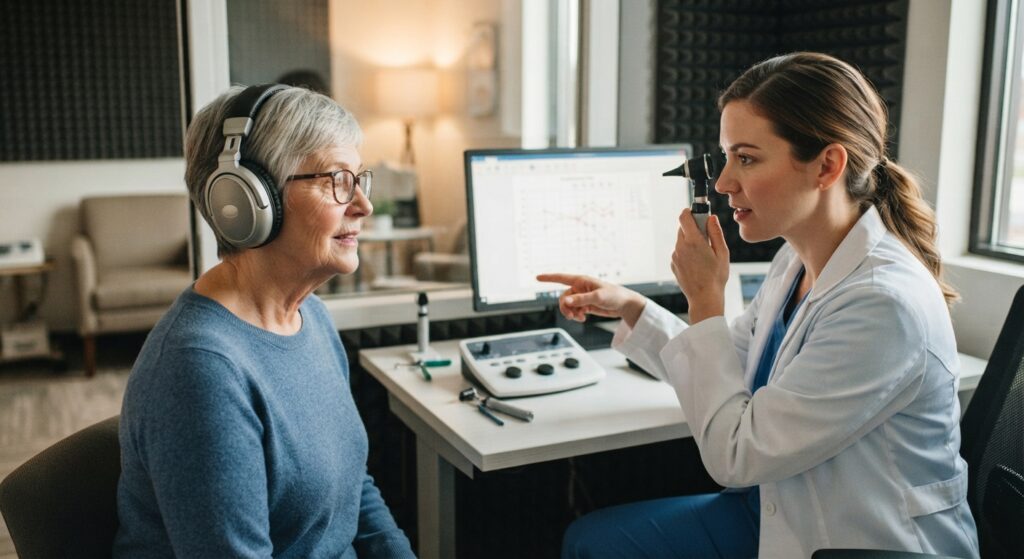
This is why the ear canal examination that precedes hearing testing is so important. If significant wax is found during the physical examination, the provider at American Family Hearing Aid Center will recommend removing it before completing the audiometric portion of the test. This ensures the results reflect your true hearing ability and not an artificial conductive blockage that could be corrected.
Signs That Your Ears May Be Impacted
Not all earwax impactions are obvious. Some people develop significant blockages before noticing any symptoms. Common signs include a feeling of fullness or pressure in the ear, muffled or reduced hearing, tinnitus such as ringing or buzzing sounds, earache or discomfort, itching inside the ear canal, and occasionally a mild cough triggered by pressure on the vagal nerve.
If you have noticed any of these signs, or if it has been more than a year since your ears were examined, scheduling a hearing evaluation or a dedicated ear cleaning appointment is a sensible step.
What Professional Ear Cleaning Involves
Professional ear cleaning at American Family Hearing Aid Center in Marietta is safe, comfortable, and typically takes only a few minutes. The provider first examines the ear canal with an otoscope to assess the amount and consistency of the wax present.
Depending on the type and location of the wax, removal may involve irrigation with warmed water, manual extraction using a curette, or suction. The provider selects the most appropriate method based on what is observed. After cleaning, the canal is examined again to confirm full clearance, and the patient typically notices an immediate improvement in sound clarity.
Hearing Aid Users and Earwax
Patients who wear hearing aids are at higher risk of earwax-related problems for two reasons. First, the hearing aid dome or earmold in the ear canal can block the natural outward migration of wax. Second, wax that accumulates in the canal can enter the hearing aid itself, clogging the wax filter or sound port and causing the device to malfunction.
Earwax is the most common cause of hearing aid performance problems and the most common reason patients bring their devices in for repair. Keeping the ears clean reduces both hearing difficulty and hearing aid wear significantly. Contact the clinic to schedule ear cleaning or a full hearing evaluation.
Frequently Asked Questions
Can earwax cause permanent hearing loss?
Earwax buildup does not cause permanent hearing loss on its own. It creates a temporary conductive blockage that resolves with removal. However, untreated impaction over a long period, or impaction that leads to repeated infection, can contribute to more serious problems.
How do I know if my ears are blocked with wax?
Signs of earwax impaction include a sensation of fullness in the ear, muffled hearing, tinnitus, earache, itching, and occasionally a cough. Some people notice no symptoms until the canal is nearly fully blocked.
Is it safe to use cotton swabs to clean ears?
No. Cotton swabs tend to push wax deeper into the canal rather than removing it, and they carry a real risk of damaging the eardrum or ear canal lining. Most health guidelines recommend against using cotton swabs inside the ear canal.
How often does earwax need to be professionally removed?
Frequency varies. Many people never need professional earwax removal. Hearing aid users, older adults, and those with narrow or curvy canals may need cleaning every few months. American Family Hearing Aid Center can advise on an appropriate schedule for your individual situation.
Will a hearing test show if my ears are blocked with wax?
Yes. A comprehensive hearing evaluation includes a visual examination of the ear canals. If significant earwax is found, the provider will typically recommend removal before completing audiometric testing to ensure the results are accurate.
Can earwax damage my hearing aids?
Yes. Earwax is the leading cause of hearing aid malfunction. It clogs wax filters, blocks sound ports, and can migrate into the receiver, causing reduced output or failure. Keeping the ears clean reduces the frequency of hearing aid repairs needed.
Mark Stevenson, HIS
Hearing Instrument Specialist with more than 25 years in hearing healthcare, and the person who runs every hearing test, fitting and adjustment at American Family Hearing Aid Center in Marietta. A Hearing Instrument Specialist tests hearing and fits hearing aids. We do not diagnose medical ear conditions, and we refer to a physician when something needs one.
This article is general information, not medical advice about your own hearing. If you have sudden hearing loss, one-sided loss, ear pain or drainage, contact a doctor promptly.
Hearing aids are among the most effective tools for managing tinnitus when hearing loss is also present. By amplifying environmental sound, they reduce the contrast that...
Ringing in the ears, known as tinnitus, is most commonly caused by noise-induced hearing loss, age-related hearing changes, or earwax buildup. American Family Hearing Aid Center...
Custom ear molds are precisely fitted devices made from a silicone impression of an individual's ear canal. They are used for hearing aids, ear protection, musician's...
September 29, 2026 · 5 min read
Find out where your hearing actually stands
A consultation takes about 45 minutes, and you leave with an audiogram and a plain explanation of it.