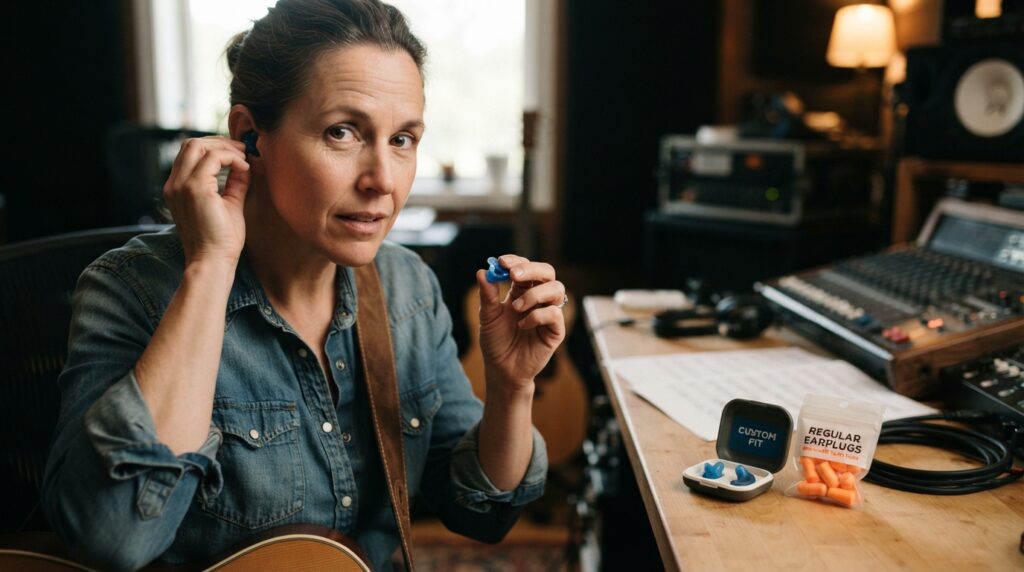
Custom Ear Protection vs. Regular Earplugs: Which Is Better for Your Hearing?
By admin, Hearing Instrument Specialist · September 29, 2026 · 5 min read
Custom ear protection outperforms generic earplugs in comfort, consistency, and hearing protection because it is molded precisely to the individual’s ear canal.American Family Hearing Aid CenterinMarietta, GAprovides custom ear molds and protection for noise, music, shooting, motorcycling, and swimming. To find out which solution fits your lifestyle,contact the teamor learn more on theour-services page.
Why Hearing Protection Matters More Than People Think
Noise-induced hearing loss is entirely preventable, yet it affects an estimated 17 percent of adults in the United States. Unlike age-related hearing loss, noise-induced loss results from preventable exposure to loud sounds, either a single sudden intense noise or repeated exposure to moderately loud environments over time.
The damage is cumulative and permanent. The hair cells in the inner ear that convert sound waves into nerve signals do not regenerate once destroyed. Once noise-related hearing loss occurs, the only management option is amplification through hearing aids. Prevention, in the form of consistent and effective ear protection, is the only way to avoid it. If you work or recreate in loud environments, a hearing test establishes your current baseline before any damage progresses further.
The question is not whether to use hearing protection in loud environments. The question is whether the protection you are using is actually doing its job.
The Problem With Generic Foam Earplugs
Foam earplugs are widely available, inexpensive, and convenient. Their rated Noise Reduction Rating (NRR) can look impressive on packaging, sometimes 30 decibels or higher. But that rating is obtained under laboratory conditions with a trained tester inserting the plugs correctly. Real-world performance is consistently lower, often by half, because most users do not insert foam earplugs properly. If you are unsure whether your hearing has already been affected, a hearing test at American Family Hearing Aid Center can tell you.
Proper foam earplug insertion requires rolling the plug tightly, inserting it deeply into the canal, and holding it in place until it expands fully. Even with correct technique, the fit varies because ear canals vary enormously in size and shape from person to person. A foam plug sized for an average ear canal may fit loosely in a wider one, creating gaps that allow noise to bypass the protection entirely. Custom ear protection eliminates this problem by fitting the individual’s exact anatomy.
How Custom Ear Protection Is Different
Custom ear protection starts with an ear impression, a silicone mold of the individual’s ear canal and outer ear taken by the team at American Family Hearing Aid Center. That impression captures the unique contours of the patient’s anatomy, including every curve and feature that makes each ear canal distinct.
The finished custom ear mold is produced to fit that specific anatomy precisely. There is no guessing about insertion, no rolling and waiting for expansion, and no variation in fit from one use to the next. The seal is consistent every time the mold is inserted, which means the protection delivered is consistent and reliable.
Custom ear molds are also significantly more comfortable for extended wear. Generic foam plugs can cause pressure, soreness, and a sense of ear fullness that makes people remove them before they should. Custom molds, because they conform to the ear’s natural shape, are comfortable enough to wear throughout a full work shift or a long shooting session.
Applications: Who Benefits From Custom Ear Protection
Firearm users: Shooting produces some of the most intense and damaging impulse noise of any recreational activity. Even a single shot without protection can cause permanent damage. Custom shooter’s plugs provide consistent protection and can be designed with filtered vents that allow conversation and range commands while blocking the impulse noise of the shot.
Musicians and concert-goers: Musician’s earplugs use a flat attenuation filter that reduces volume across all frequencies evenly, preserving sound quality and musicality rather than muffling it the way foam plugs do. Professional musicians rely on them to protect their hearing while continuing to perform.
Motorcyclists: Wind noise at highway speeds is a significant and underappreciated source of noise-induced hearing damage. Custom motorcycle earplugs are designed to reduce wind noise while still allowing awareness of traffic and other environmental sounds.
Industrial and construction workers: Consistent fit and comfort are critical in occupational settings where hearing protection must be worn for extended periods. Custom protection eliminates the compliance problems that foam plugs create through discomfort and inconsistent fit.
Swimmers: Custom swim plugs keep water out of the ear canal and are particularly valuable for patients with ear tubes, perforated eardrums, or a history of external ear infections.
Getting Custom Ear Protection in Marietta
The process is quick and straightforward. The team at American Family Hearing Aid Center takes a silicone impression of each ear canal. The impressions are sent to a lab where the custom molds are fabricated. The finished molds are typically ready within one to two weeks and are fitted at a follow-up appointment.
Contact the clinic to schedule an ear impression appointment and discuss which type of protection fits your activities and lifestyle.
Frequently Asked Questions
How much better is custom ear protection compared to foam earplugs?
Foam earplugs depend heavily on correct insertion, and most users do not insert them correctly. Custom protection is molded precisely to your ear canal, eliminating the fit variable. Properly worn custom plugs consistently deliver their rated noise reduction, while foam earplugs often underperform in real-world use.
How long do custom ear molds last?
Custom ear molds for protection typically last three to five years with proper care. The material is durable and can be cleaned and maintained at home. If the ear canal changes due to weight change or age, a new impression may be needed for a continued optimal fit.
Who should use custom ear protection?
Anyone with regular exposure to loud environments should consider custom protection: people who work in manufacturing, construction, music, or military settings, as well as those who shoot, ride motorcycles, or attend loud events on a regular basis.
Are there earplugs for musicians that still let sound through?
Yes. Musician’s earplugs use a filtered design that reduces volume across frequencies more evenly than standard plugs, preserving the quality and balance of sound while reducing damaging levels. They are widely used by professional and amateur musicians and concert-goers.
Can I get custom earplugs for swimming?
Yes. Custom swim plugs are designed to keep water out of the ear canal and are especially valuable for people with ear tubes, perforated eardrums, or a history of swimmer’s ear. They are molded to the individual ear for a secure, watertight fit.
How does American Family Hearing Aid Center make custom ear molds?
The process involves taking a silicone impression of the ear canal and outer ear. The impression captures the unique contours of the individual’s anatomy and is used to produce a precisely fitted ear mold. Contact the clinic to schedule an appointment.
Mark Stevenson, HIS
Hearing Instrument Specialist with more than 25 years in hearing healthcare, and the person who runs every hearing test, fitting and adjustment at American Family Hearing Aid Center in Marietta. A Hearing Instrument Specialist tests hearing and fits hearing aids. We do not diagnose medical ear conditions, and we refer to a physician when something needs one.
This article is general information, not medical advice about your own hearing. If you have sudden hearing loss, one-sided loss, ear pain or drainage, contact a doctor promptly.
Hearing aids are among the most effective tools for managing tinnitus when hearing loss is also present. By amplifying environmental sound, they reduce the contrast that...
Ringing in the ears, known as tinnitus, is most commonly caused by noise-induced hearing loss, age-related hearing changes, or earwax buildup. American Family Hearing Aid Center...
Custom ear molds are precisely fitted devices made from a silicone impression of an individual's ear canal. They are used for hearing aids, ear protection, musician's...
September 29, 2026 · 5 min read
Find out where your hearing actually stands
A consultation takes about 45 minutes, and you leave with an audiogram and a plain explanation of it.