
Hearing Aid Clean and Check in Marietta, GA
The cheapest appointment we offer, and the one that prevents most of the repairs we see. Twice a year, about fifteen minutes, by appointment.
IN SHORT
A clean and check is professional maintenance for your hearing aids: wax and debris removed from the receiver, microphones, controls and battery compartment, filters and domes replaced, and a listening check to confirm the devices still perform as they should. It takes about fifteen minutes, is by appointment, and we recommend it every six months.
Why regular cleaning matters
Think of it the way you think about servicing a car. Nothing is wrong, and that is exactly the point of going.
Your hearing aids spend twelve hours a day in a warm, humid canal, in contact with wax, skin oils and, in a Georgia summer, a good deal of sweat. Add hairspray, lotion and sunscreen at the microphone ports. None of that is dramatic on any single day, and all of it accumulates.
What we see in practice is that devices which come in twice a year rarely need repairs, and devices that come in only when something has gone wrong need them repeatedly. The visit is fifteen minutes. The repair it prevents is a week without your hearing aids.
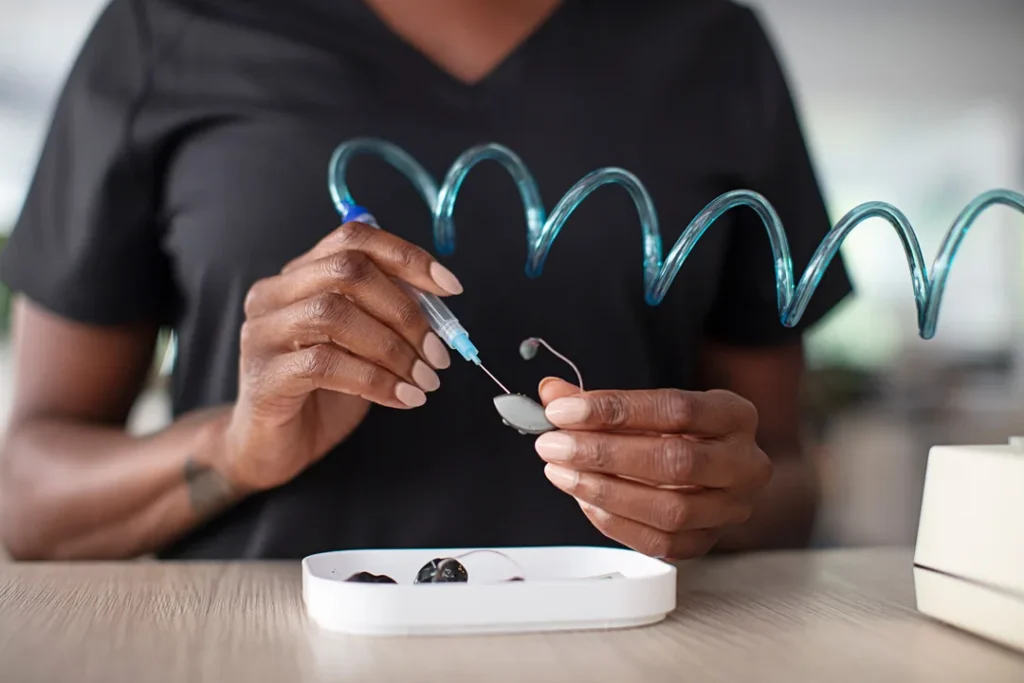
What actually happens at a clean and check
It is more than a wipe down. Every component gets looked at under magnification.
- Wax and debris removed from the receiver, sound bore, vents and shell
- Microphone ports cleared of the cosmetics, lotion and dust that block them
- Wax filters and domes replaced with fresh ones
- Tubing and earmolds checked for hardening, discoloration or cracks, and replaced if needed
- Battery contacts and charging pins cleaned of corrosion
- Controls and buttons tested so nothing is sticking
- A listening check through a stethoscope, so we hear what you hear rather than assuming
- Your ears examined too, because wax in the canal defeats a perfectly clean device
And one thing most clinics skip
If it has been a couple of years, we will also ask whether anything sounds different. Hearing changes, and devices running four-year-old settings are a very common reason people think their hearing aids are wearing out when actually the prescription has moved. That is a retest, not a repair, and it is a better outcome.
How often, and what it costs
Every six months
That is the schedule we recommend for most people. If you produce a lot of wax, work outdoors, or sweat heavily, every three or four months is more realistic.
Booked as a service visit
Clean and check is charged as a service visit, and we will tell you the amount before we start. Nobody gets a surprise on the way out.
By appointment
Open Monday to Thursday 9:00 to 4:00, or Friday 9:00 to 1:00. Calling 770-590-8662 first means you will not wait behind a fitting.
Still under manufacturer warranty?
If a clean and check turns up something that needs the manufacturer, we will go through the warranty terms with you and ship the devices out on your behalf. You do not need to work out the paperwork or the postage.
At-home maintenance between visits
Twice-yearly professional cleaning does the deep work. These six habits do the daily work, and together they are why some people never need a repair.
- Wipe them down every night with a dry cloth or the brush we give you. Ten seconds.
- Dry them overnight in an electronic dehumidifier. In this climate it is the single most valuable thing on this list.
- Change wax filters on a schedule, monthly for most people, rather than waiting for the device to go quiet.
- Wash your hands first. Skin oils and lotion transfer straight onto the microphone ports.
- Store them in the case or charger, not on a bedside table where they get knocked off or found by a pet.
- Run the self-check in the app monthly if your devices support it. It flags a fault before you notice one.
What not to do
More devices are damaged by well-meant cleaning than by neglect. Please avoid all of these.
- Never use water, alcohol, wipes or cleaning solutions. They get inside and corrode what they reach.
- Never apply heat. No hair dryers, no ovens, no radiators, and never left on a dashboard.
- Do not poke anything into the receiver or sound bore. Pins and paperclips push wax further in and puncture the diaphragm.
- Do not use cotton buds in your ears. They compact wax against the eardrum, which is a common cause of what feels like sudden hearing loss.
- Do not wear them for hairspray, lotion or sunscreen. Put them in after, not before.
- Do not charge a wet device. Dry it fully first, and bring it in if it does not recover.
Common questions
How often should hearing aids be professionally cleaned?
Every six months for most people. More often if you produce a lot of wax, work outdoors or sweat heavily. It takes about fifteen minutes.
What does a clean and check involve?
Booked as a service visit. Clean and check is charged as a service visit, and we will tell you the amount before we start.
Do I need an appointment?
Yes. We book Monday to Thursday 9:00 to 4:00 or Friday 9:00 to 1:00. The clinic is busy, so a booked slot means you are seen without waiting. Call 770-590-8662. Calling 770-590-8662 first means you will not wait behind a fitting.
Can I clean my hearing aids myself?
Daily wiping and filter changes, yes, and we will show you how. Deep cleaning of the receiver and microphone ports needs magnification and proper tools, and this is where home attempts most often cause damage.
What is the difference between a clean and check and a repair?
A clean and check is scheduled maintenance on a working device. A repair fixes something that has stopped working. The whole point of the first is to avoid needing the second.
Can I bring hearing aids bought somewhere else?
Yes. We clean and service all makes and models regardless of where they came from.
My hearing aids sound weaker even though they are clean. What now?
Often the prescription rather than the device. Hearing changes, and settings from four years ago may no longer match. That is a retest and a reprogram, which is a better answer than a repair.
Due for a clean and check?
Fifteen minutes, by appointment, and it is the appointment most likely to save you a week without your hearing aids.